
Tactical Backpack Tech Pack Checklist for OEM Buyers

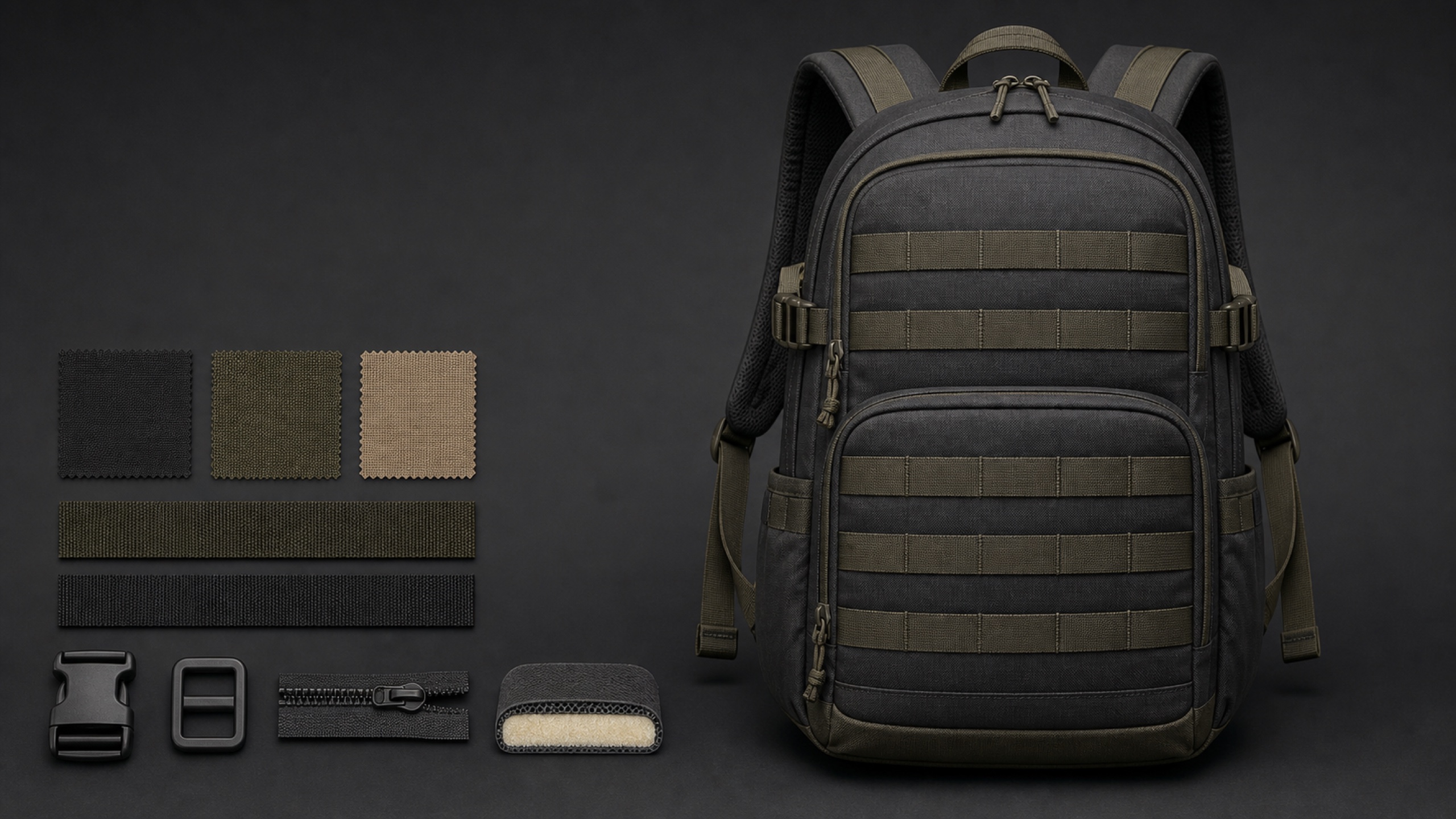
OEM Buyer Guide
Tactical Backpack Tech Pack Checklist for OEM Buyers
Prepare the product details a backpack supplier needs before quotation, sample development, and bulk-order discussion.
What Is a Tactical Backpack Tech Pack?
A tactical backpack tech pack is a working specification document for product development. It gives a supplier a clearer reference for what should be quoted, sampled, reviewed, and approved.
For a new backpack project, the document may include drawings, measurements, material direction, compartment layouts, hardware references, branding files, packaging notes, and questions that still need confirmation. It is not a replacement for supplier communication or sample review. It is the starting reference that makes those conversations more precise.
Quick Checklist: What to Prepare Before Contacting a Supplier
1. Define the Product and Buyer Use Case
Start with the product decision, not with a fabric name. A supplier needs to understand how the backpack is expected to be positioned and what the user must be able to carry or access.
- Product name or working project name
- Target buyer or distribution channel
- Expected use environment and load direction
- Preferred capacity or size range
- Reference products, sketches, or mood boards
- Features that must remain in the design
Keep this section practical. “Tactical” can describe different product positions, from a compact daily pack to a larger modular pack. The product brief should make the intended market and structure easier to understand without relying on vague performance language.
2. Record Dimensions and Backpack Structure
Dimensions are one of the most important parts of an OEM backpack specification. State whether each measurement is an outside dimension, a compartment dimension, or a target range that can be reviewed during sampling.
| Specification area | What to record | Why it matters |
|---|---|---|
| Overall size | Height, width, depth, and whether the measurement is approximate or fixed | Creates a starting point for pattern development and packing discussion |
| Main compartment | Opening direction, usable space, divider requirements, and access preference | Affects pattern layout, zipper length, lining, and sample review |
| Front and side areas | Pockets, bottle areas, organizer sections, and attachment zones | Helps separate storage needs from decorative details |
| Back panel | Padding direction, airflow preference, laptop or plate area if applicable | Defines construction layers and the buyer’s inspection points |
| Straps and handles | Shoulder strap shape, adjustability, carry handle position, and attachment points | Supports sample comparison and fit review |
When a measurement is not final, label it as a target or range. This is more useful than presenting an uncertain dimension as an approved specification.
3. Specify Fabric, Lining, and Reinforcement Direction
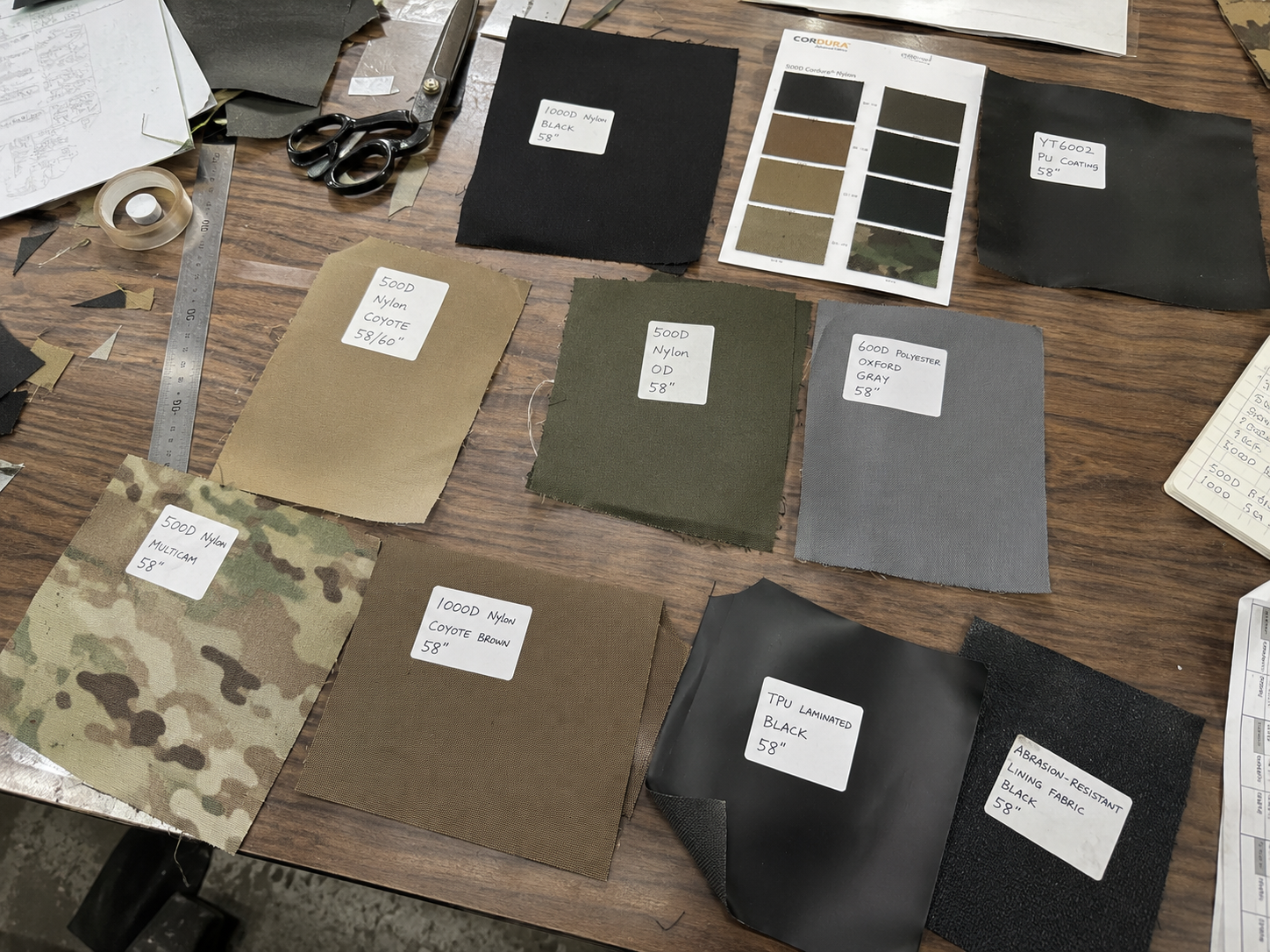
Material selection should be connected to the product’s expected structure and commercial position. Buyers often compare 500D and 1000D nylon, but fabric weight is only one part of a workable backpack specification.
Record the material direction for:
- Outer fabric and color reference
- Lining or internal divider material
- Webbing width and color
- Foam or padding areas
- Binding, edge finishing, and seam coverage
- Reinforcement at handles, strap joins, corners, and attachment points
- Coating, finish, or water-resistance preference when relevant to the project
For a deeper material comparison, see 500D vs 1000D Nylon for Tactical Backpacks. The tech pack should still identify the final material decision as confirmed, preferred, or open for supplier review.
4. List Zippers, Buckles, Webbing, and Other Hardware
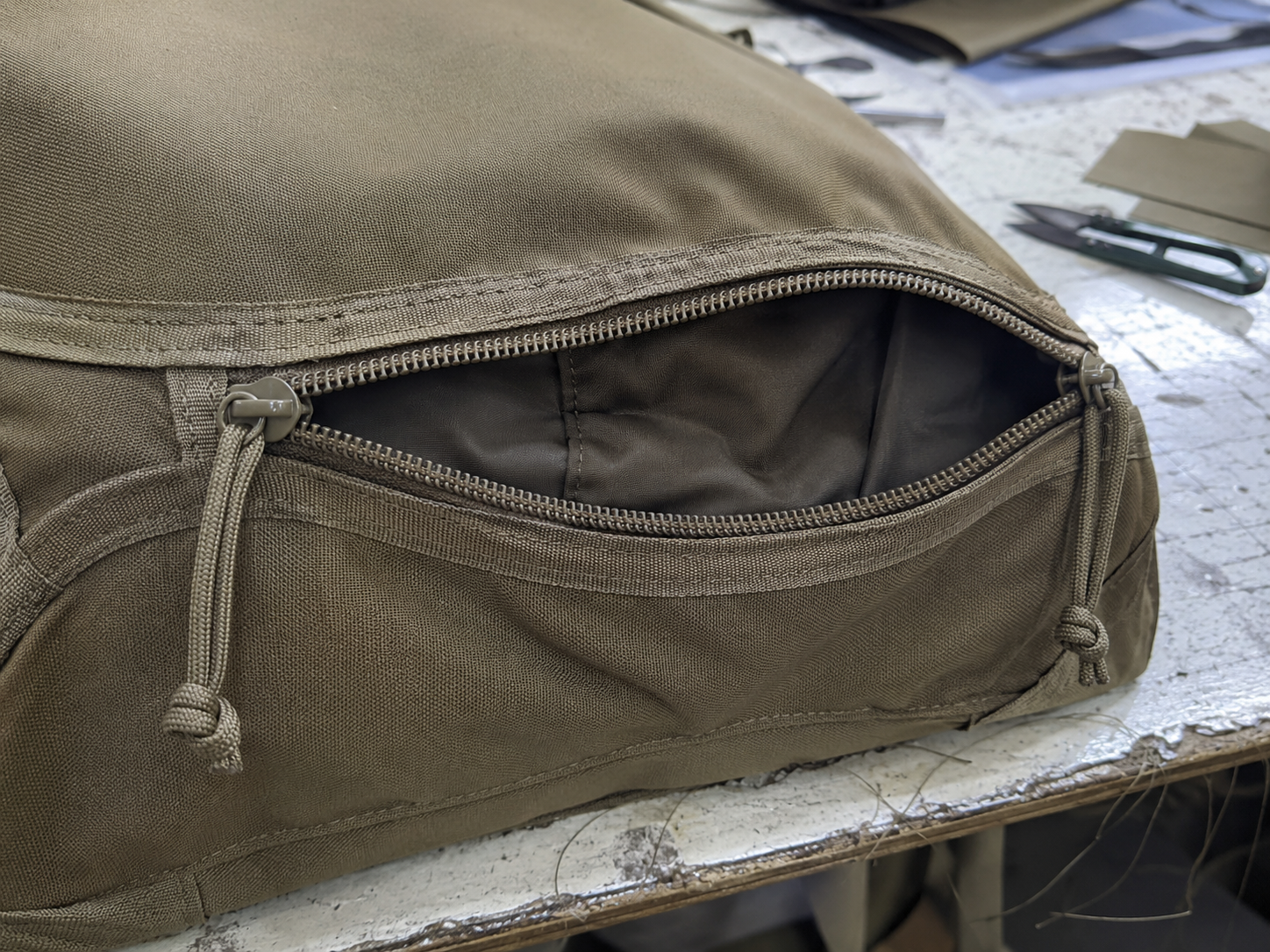
Hardware details are easy to overlook because they appear small on a drawing. They can still affect the sample, the appearance, the adjustment range, and the quotation.
A tech pack should not claim that a component is certified, tested, or suitable for a specific load unless the buyer has supporting evidence and the project requires that verification.
5. Clarify MOLLE and Modular Attachment Requirements
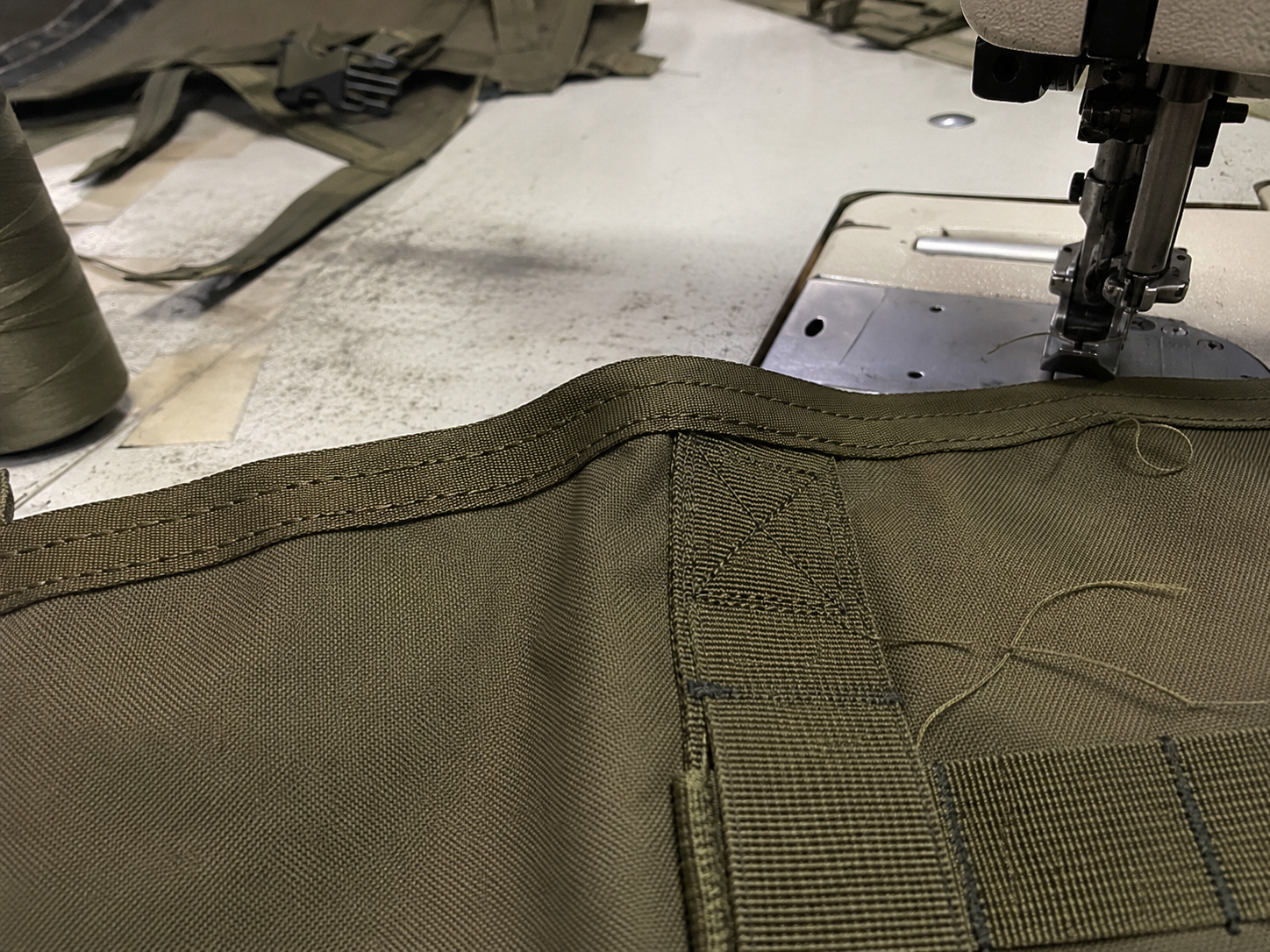
If the backpack includes MOLLE or PALS-style webbing, show where the webbing is located and what the buyer expects to attach. Do not assume that every modular layout has the same spacing, reinforcement, or pouch fit.
Include:
- Panel location and usable attachment area
- Webbing direction and rows
- Preferred pouch or accessory reference
- Stitching and reinforcement areas for review
- Whether the layout must match an existing approved product
Use the MOLLE webbing spacing guide when checking the technical side of a modular layout. The backpack tech pack should remain focused on the backpack’s own structure and attachment needs.
6. Add Branding, Label, and Packaging Requirements
Branding information should be supplied as a production reference, not only as a logo file. State the intended location and the preferred method when known.
- Logo file and approved color reference
- Logo placement and approximate size
- Woven label, rubber patch, print, or embroidery direction
- Care label or product label information
- Hangtag, polybag, carton, or insert requirements
- Barcode, SKU, or packaging marks if required by the buyer
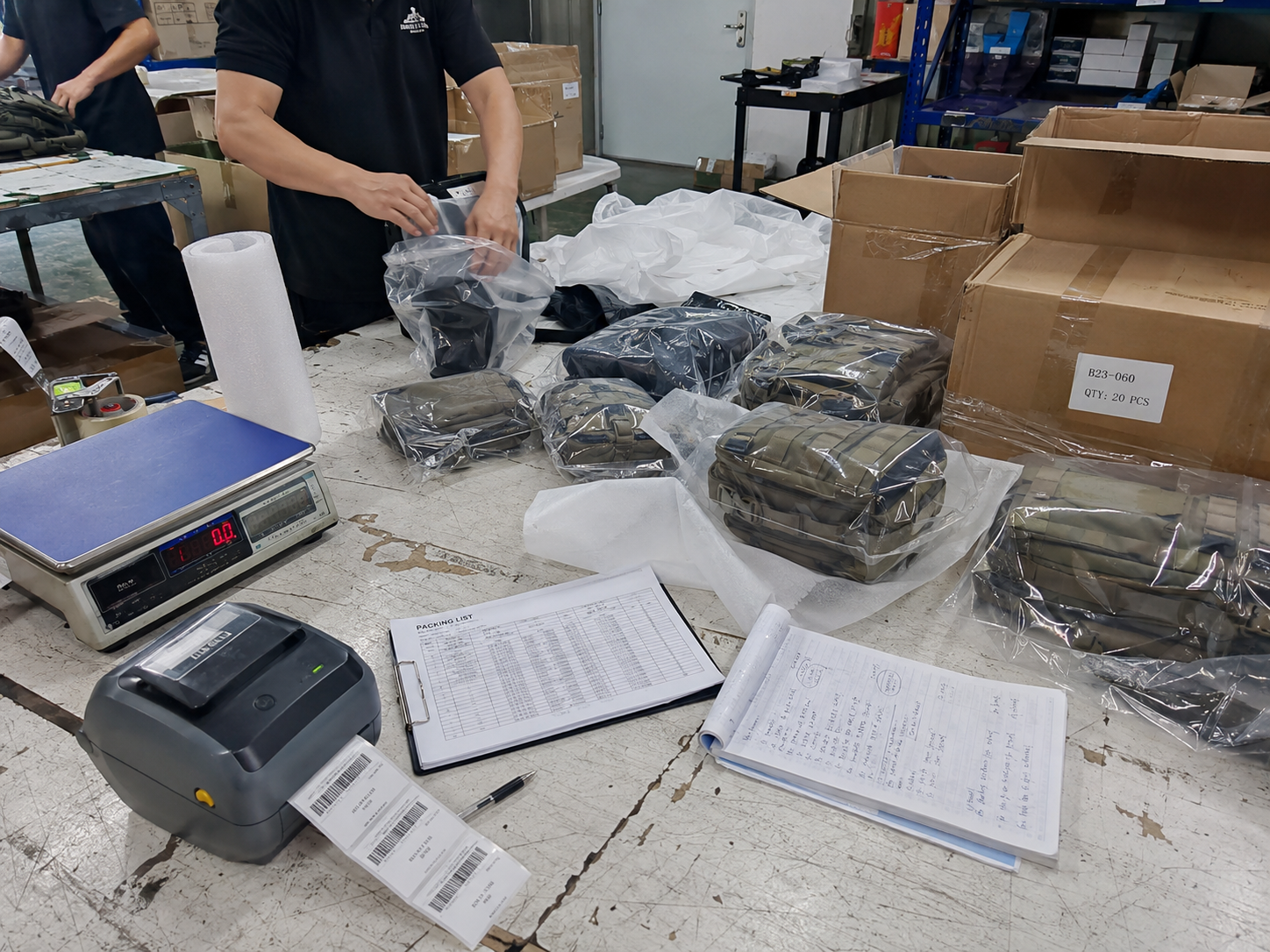
Packaging requirements can affect the quotation and sample review. If the packaging is not final, write “to be confirmed” and ask the supplier to separate product packaging from export-carton assumptions in the RFQ discussion.
7. Prepare a Sample Review Checklist
A tech pack becomes more useful when it also defines how the first sample will be reviewed. This helps the buyer compare the sample against the intended design without turning every preference into an unsupported performance claim.
| Sample checkpoint | Buyer question |
|---|---|
| Size and shape | Does the sample match the agreed dimensions and overall silhouette? |
| Compartments | Are openings, dividers, pockets, and access points positioned as expected? |
| Materials | Do fabric, lining, webbing, padding, and colors match the approved direction? |
| Hardware | Are zipper paths, buckles, adjusters, handles, and pullers correct and usable? |
| Stitching | Are seams, binding, bartacks, and reinforcement located where the tech pack indicates? |
| Branding | Are logo placement, label position, and visible finishing aligned with the artwork? |
| Packing | Does the sample or packing reference show what needs to be confirmed before bulk production? |
Keep a record of approved changes. If a later revision changes a measurement, material, hardware component, or branding position, update the working reference before the next quotation or sample round.
8. Include the Commercial Information Needed for an RFQ
A supplier cannot review the product request efficiently if the technical direction is separated from the commercial information. Include the details that affect quotation and sample planning.
- Estimated order quantity or quantity range
- Number of colors or variants
- Sample quantity and sample revision expectations
- Branding and packaging requirements
- Destination country or delivery region
- Target launch timing, if known
- Reference drawings, artwork, photos, or existing sample files
- Questions that require a supplier recommendation
For questions about MOQ and sample planning, review MOQ, Samples, and Lead Time. When the specification is ready, submit the project through PANOAR’s RFQ page with the available references.
How PANOAR Fits This Checklist
A buyer can use this checklist to organize a backpack project before contacting an OEM or ODM supplier. PANOAR’s existing buyer path separates the main decisions into practical steps: compare the manufacturing model, discuss product and material direction, review sample and MOQ questions, and then submit an RFQ.
For a backpack project, buyers can also review the custom tactical backpack manufacturer page and the tactical backpack product reference. These pages serve a commercial or product role; this article remains the preparation guide for the technical information that should travel with an inquiry.
Related Backpack Sourcing Guides
- How to Choose a Tactical Backpack Supplier for supplier evaluation questions.
- Tactical Backpack vs Military Backpack for product positioning and structure comparison.
- 500D vs 1000D Nylon for Tactical Backpacks for fabric-direction questions.
- Custom Utility Pouch Tech Pack Checklist for a related soft-goods specification workflow.
FAQ
What should be included in a tactical backpack tech pack?
Do I need a finished technical drawing before contacting an OEM supplier?
Should a tech pack include 500D or 1000D nylon?
What information helps a backpack supplier prepare an RFQ?
Ready to Prepare a Tactical Backpack RFQ?
Send the specifications you already have, identify the open decisions, and include any drawings, reference images, artwork, or existing samples that help explain the project.