
Custom Plate Carrier OEM: Platform, Fit and Hardware Guide

OEM Buyer Guide
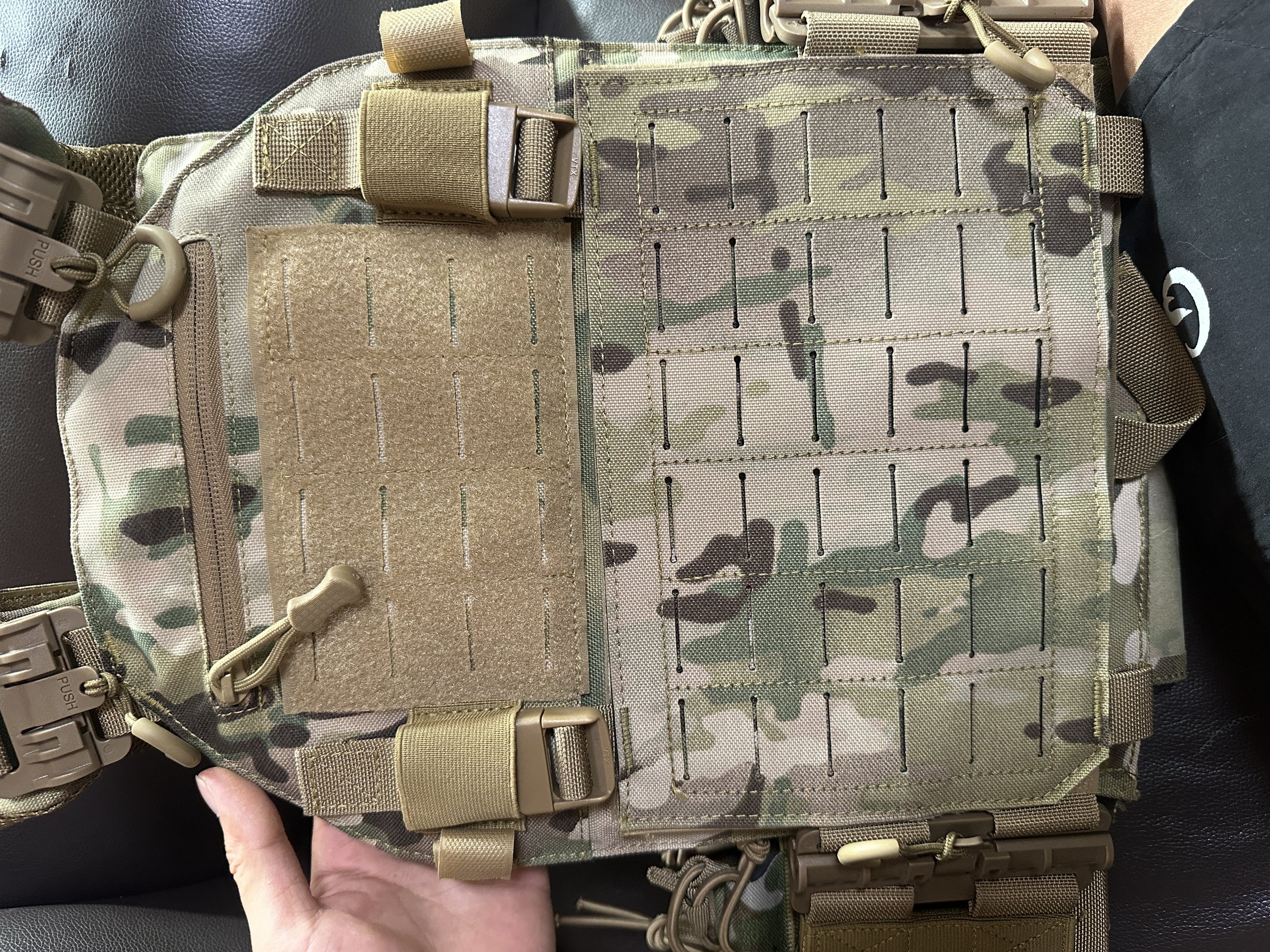
A plate carrier is not one standard product with a different logo. The platform, plate pocket, cummerbund, shoulder adjustment, front placard and back-panel interface all change how the sample is patterned and how the finished carrier works.
Custom Plate Carrier Platform: Laser-Cut or Sewn PALS?
We start a custom plate carrier project by identifying the attachment platform. Buyers often call both systems “MOLLE,” but a laser-cut panel and traditional sewn webbing behave differently during pattern development, assembly and sample inspection.
A traditional PALS base uses rows of nylon webbing sewn onto the carrier panel. It gives the attachment grid a visible structure and makes the stitch pattern easy to inspect. PANOAR model PA-PC-019 standard MOLLE plate carrier is a product-line reference for this full-webbing direction.
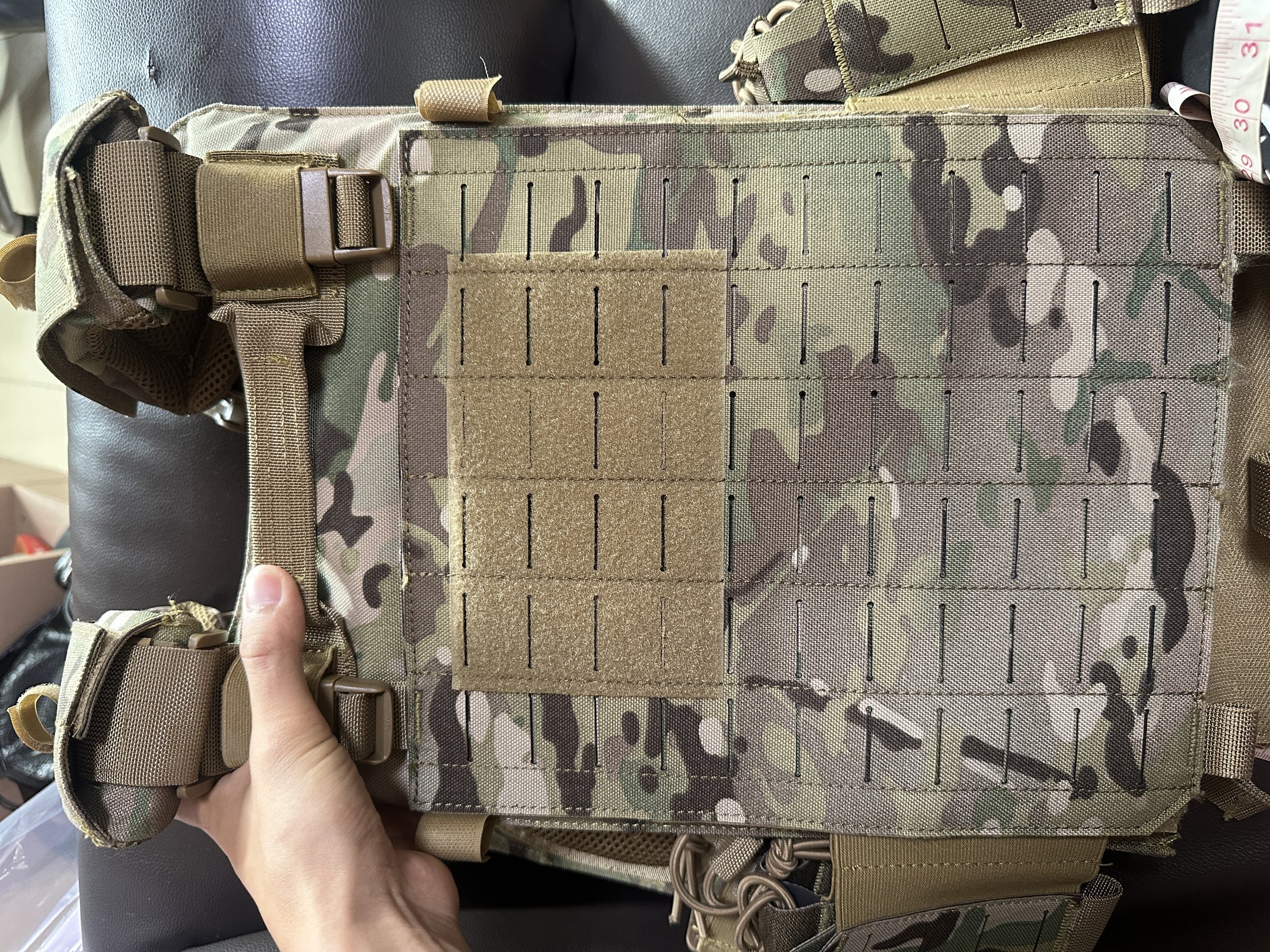
A laser-cut platform creates attachment slots in a laminated or reinforced panel. It can produce a flatter visual profile, but the slot geometry, material stability and reinforcement around the cut area become part of the sample decision. PANOAR models PA-PC-018 low-profile plate carrier and PA-PC-009 quick-release plate carrier show two laser-cut directions already present in the product line.
| Decision point | Traditional sewn PALS | Laser-cut platform |
|---|---|---|
| Visual structure | Visible horizontal webbing rows and stitch lines | Flatter panel with cut attachment slots |
| What we inspect | Webbing width, row height, stitch position, symmetry and reinforcement | Slot dimensions, row alignment, cut edges, panel stiffness and reinforcement |
| Accessory check | Thread the intended pouch through several rows and check stitch interference | Thread the intended pouch through actual slots and check that the panel does not distort |
| Best starting reference | An approved carrier or pouch that uses the required PALS relationship | A multi-view drawing or sample showing slot layout and panel material |
The useful question is not which platform looks newer. It is which one matches the brand’s product position, intended accessories and production reference. We ask what must attach to the panel before locking the row layout.
Laser Cut Plate Carrier Checks That Matter on the First Sample
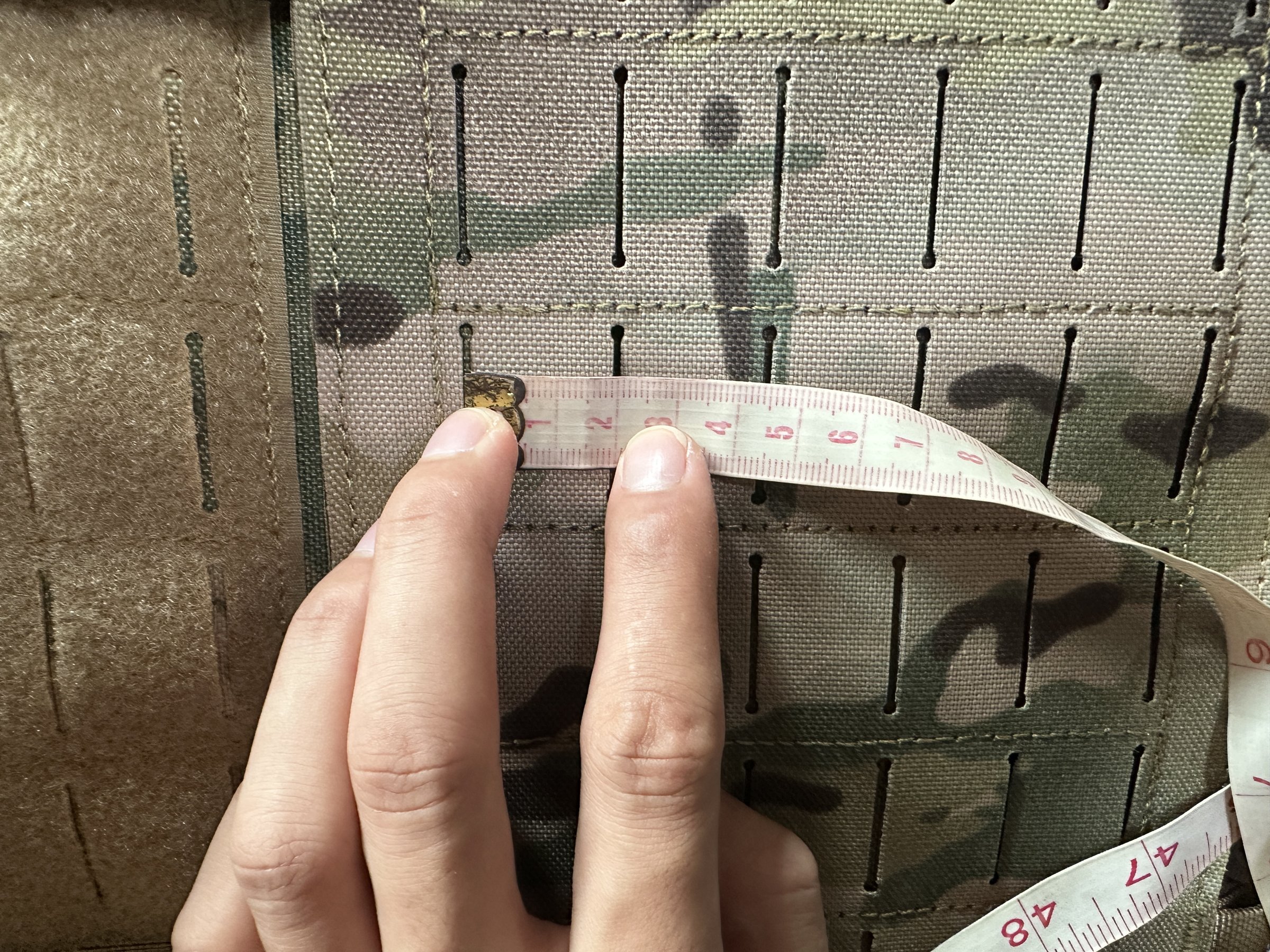
With a laser cut plate carrier, small layout differences are easy to miss in a rendering and obvious on the physical sample. We inspect the slot pattern as a working interface, not as decoration.
The MOLLE spacing reference can support the measurement review, but the approved product sample remains the working reference for the carrier’s own attachment system.
Custom Plate Carrier Plate Pocket and Insert Fit
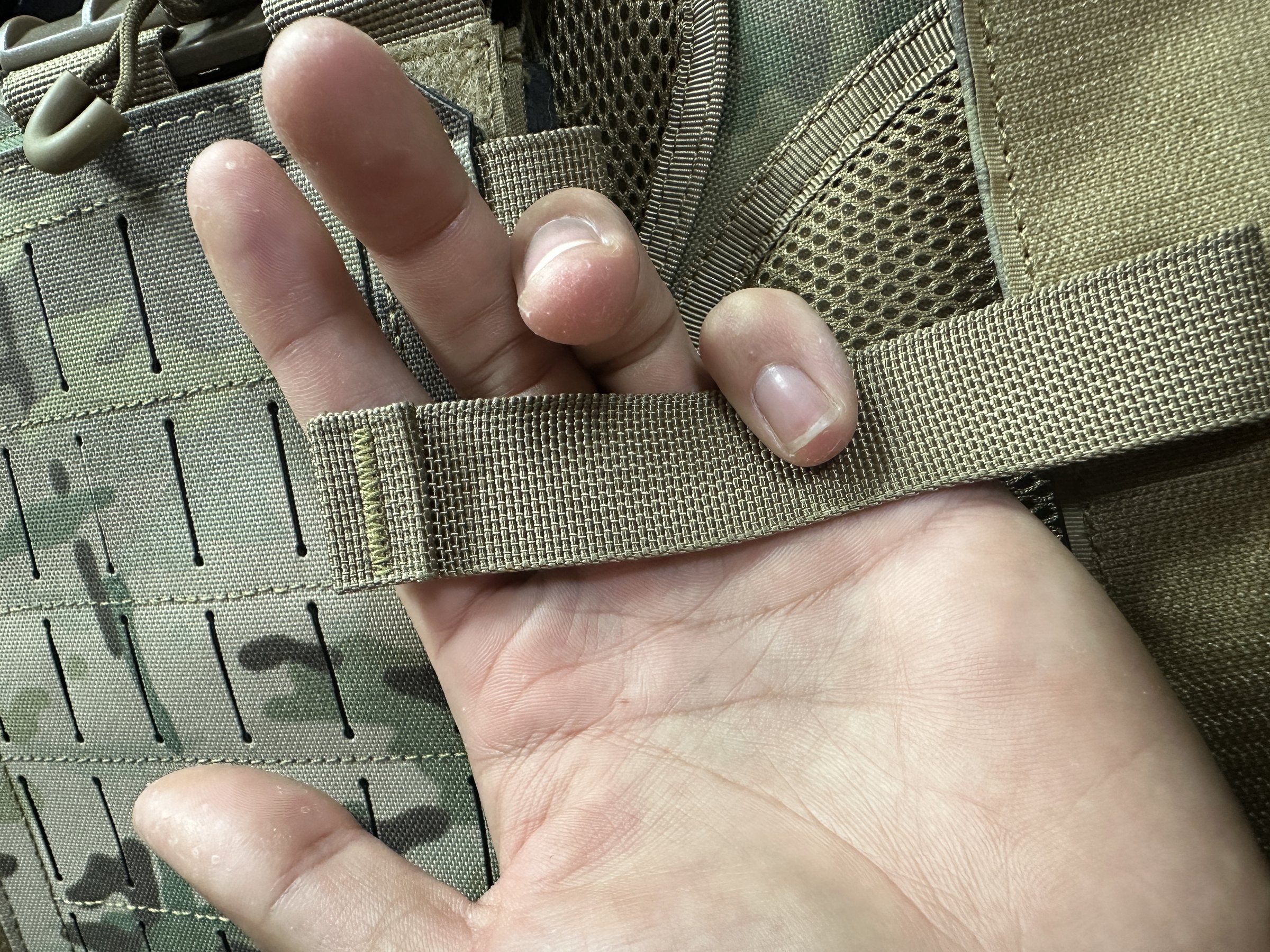
We pattern the plate pocket around the insert information supplied for the project: length, width, thickness and curvature. A medium label alone does not tell us how deep the pocket must be, how the corners should sit or where the closure should meet.
Four checks make the first sample useful:
- Insertion: the intended plate enters without folding the pocket edge or forcing a curved corner through a flat opening.
- Seating: the plate reaches the intended position and remains centered between the front-panel edges.
- Retention: the closure reaches its full contact area without pulling the surrounding panel out of shape.
- Removal: the plate can be removed without damaging the lining, binding or closure area.
If the buyer changes the plate model after pattern approval, we treat that as a fit change. Even when the nominal size is similar, thickness, curvature and corner profile can affect the pocket.
Plate Carrier Cummerbund and Shoulder Adjustment Decisions
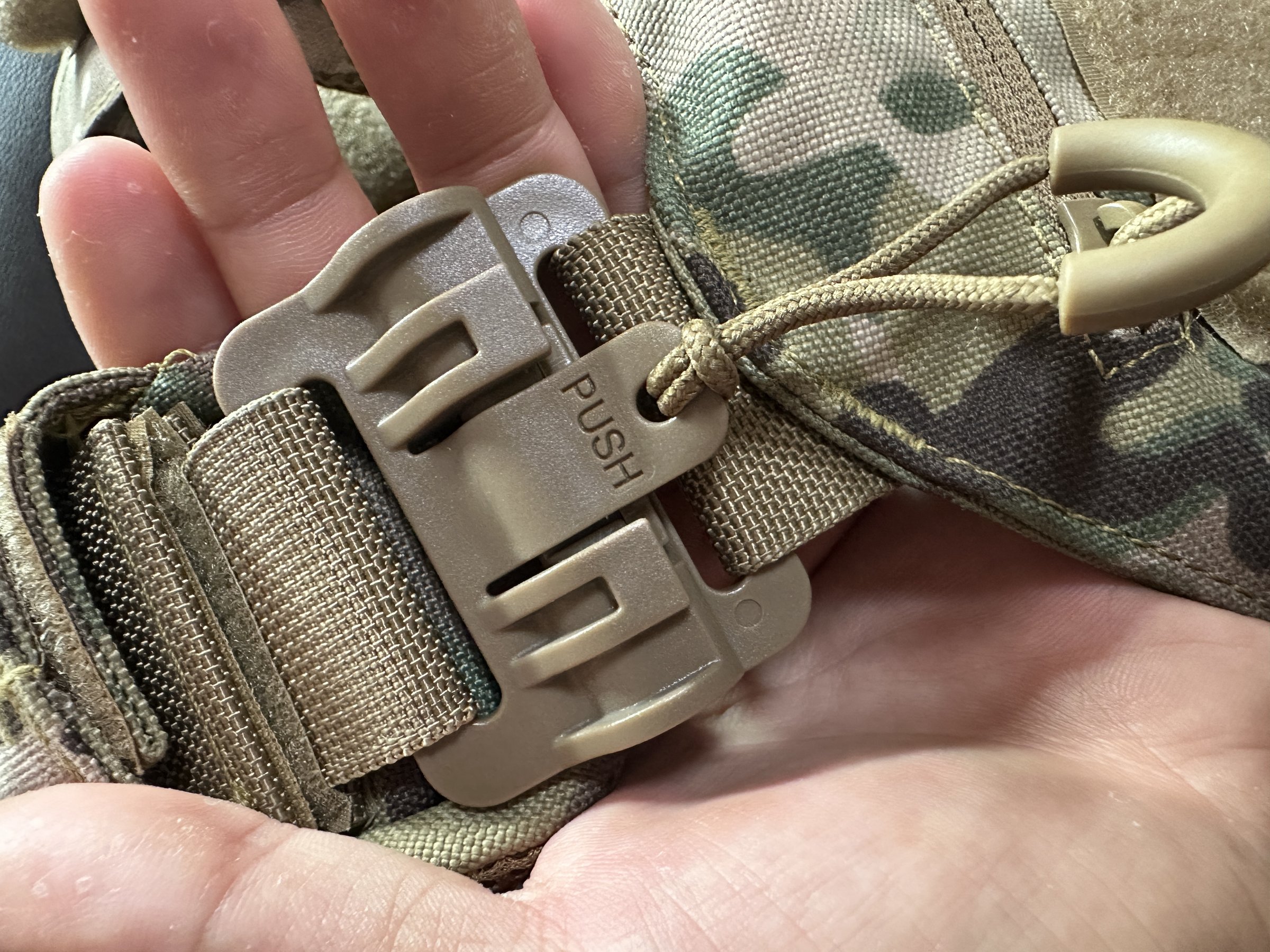
The plate carrier cummerbund controls more than waist size. It determines how the front and back panels connect, how side attachments sit and how quickly the user can open or close the carrier. We ask for the intended minimum and maximum adjustment range before choosing the closure direction.
A fixed webbing cummerbund gives a straightforward structure. Elastic sections add movement but require decisions about stretch placement and recovery. A tube-style quick-release system changes the front connection, hardware position and usable hook-and-loop area. PA-PC-018 uses a low-profile laser-cut direction with tube-style side-release hardware, while PA-PC-009 combines a laser-cut platform with quick-release points at the shoulder and waist.
On the first sample, we check:
- whether the front panel stays centered through the required adjustment range;
- whether both sides can be adjusted evenly without twisting the cummerbund;
- whether the release hardware is reachable and oriented correctly;
- whether side MOLLE or pocket areas remain usable after adjustment;
- whether shoulder straps clear the neck opening and provide the intended overlap;
- whether shoulder pads cover the working strap area instead of sliding away from it.
Custom Plate Carrier Front Placards and Back-Panel Expansion
A placard interface must be developed as a set of matching dimensions. We compare the buckle spacing, hook-and-loop contact area, panel width and the position of the pouch load after attachment. A placard that connects but hangs too low is not an approved fit.
PANOAR model PA-PC-014 rigid placard plate carrier is a reference for a rigid front placard combined with tube-style quick-release hardware. It gives buyers a concrete reference for the required interface type.
For the back panel, define whether the zipper connects a removable expansion panel, a pocket or another component. We compare zipper length, starting position, top and bottom stops, MOLLE rows that remain usable and the clearance around the attached panel. PANOAR model PA-PC-016 zip-on back-panel plate carrier provides a product-line example of this expansion direction.
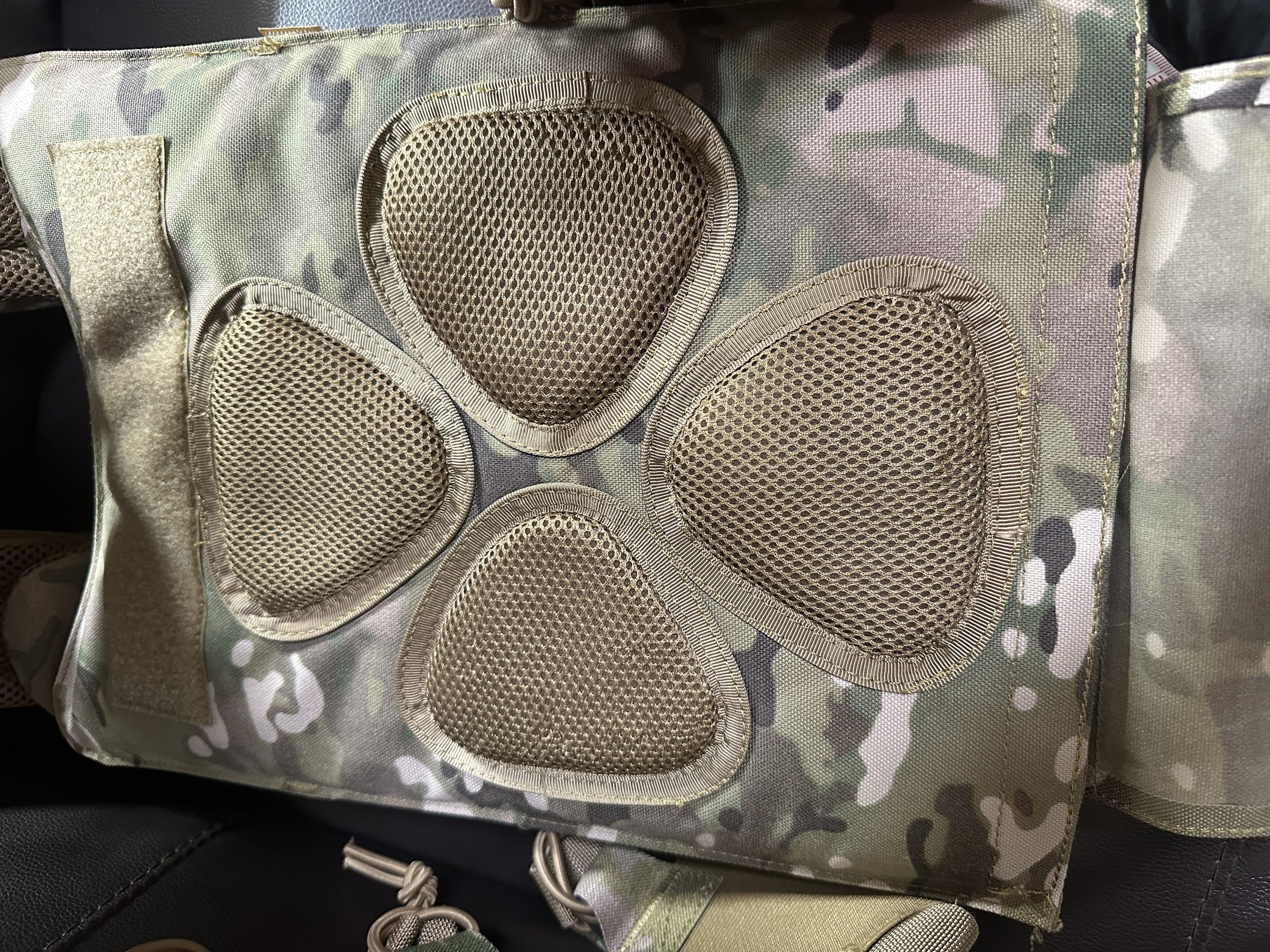
Mesh and padding need their own review. The relevant points are coverage, thickness, seam placement and whether the pads remain in position after the carrier is adjusted. PA-PC-007 is listed as an adjustable S–XXL cross-draw vest with a mesh base; see the PA-PC-007 cross-draw tactical vest for that separate structure.
Hardware, Nylon, Webbing and Color Control
Until a branded component purchase is separately confirmed, we describe the material direction in generic production terms: high-density nylon or Cordura-style nylon, quick-release polymer buckles, heavy-duty zippers and nylon webbing. This keeps the specification accurate when a brand name is not part of the approved bill of materials.
We need the buckle size, function, release direction, color and location. For zippers, we need the opening direction, chain size or reference, puller direction and where the zipper terminates. For nylon webbing, we compare width, hand feel, color and routing through each adjuster.
Color approval is a separate decision from material naming. Screens, lighting, coatings and production batches can make the same color name look different. A physical swatch or approved material reference gives us a better target. We then compare the assembled sample under consistent lighting and retain the approved reference for the next production step.
If a specified fabric or buckle is not available, the sample schedule may change while the component is sourced. PANOAR’s current reference for sample development is approximately 15–25 days, depending on material availability and the amount of development required. We review the timing again after the material and hardware list is settled.
Where Samples Usually Get Sent Back
This is one of the most common reasons a first plate carrier sample needs another round, and it can be reduced before the pattern is cut.
Color is the most common reason a first sample gets sent back. The reference usually comes from a screen image, or the physical material and dye batch were not approved before the sample was made. We reduce this by using a physical swatch or an agreed color reference, then approving the material and the assembled sample together under consistent lighting before it moves to the next stage.
For the general project-file and quotation workflow, use PANOAR’s tactical gear RFQ checklist and tech-pack checklist. This guide stays focused on the decisions that are specific to plate carriers.
Custom Plate Carrier Decisions to Lock Before Approval
Before approving the sample, we use the physical carrier to close the following product decisions:
- Laser-cut or traditional sewn PALS platform
- Actual plate dimensions, thickness and curvature
- Plate insertion, seating, retention and removal
- Cummerbund construction and adjustment range
- Shoulder routing, overlap and pad position
- Front placard width, buckle spacing and hook-and-loop contact
- Back-panel zipper position and intended attachment
- High-density nylon, mesh, padding and binding choices
- Polymer buckles, heavy-duty zippers and nylon webbing references
- MOLLE row alignment and fit with the intended pouch
- Approved color reference and comparison method
- Logo, label and private-label position
We can review a physical reference sample, multi-view drawings or a detailed concept. Concept art needs enough angles to explain the front, back, sides and internal construction. An in-person factory visit or video factory review can be arranged in advance.
Frequently Asked Questions
Can a factory quote a custom plate carrier from one photo?
One photo is not enough for a reliable unit quotation because dimensions, material consumption, internal structure, workmanship and hardware remain unknown. Supply measurements, multiple views, component requirements and estimated quantity before requesting a confirmed price.
Can PANOAR develop a plate carrier from a concept drawing?
Yes, provided the concept includes enough views and detail to explain the front, back, sides and internal structure. Dimensions, plate information, materials and open design decisions should be listed separately.
Can a sample be reproduced exactly from a physical reference?
A physical sample gives us a much stronger construction reference than photos alone. Final accuracy still depends on material availability, approved components, color references and physical sample approval.
How long does a custom plate carrier sample take?
The current reference is approximately 15–25 days, depending on whether the selected materials and hardware are in stock and how much development the design requires. We reconfirm the schedule after reviewing the product decisions.
Does the plate carrier include ballistic plates?
No. PANOAR supplies the textile carrier without ballistic plates.
Discuss Your Plate Carrier Structure
Send the plate dimensions, platform direction, cummerbund and shoulder requirements, placard or back-panel interfaces, material references, color target and intended accessories. We will review the structure and the open sample decisions with you.
Last updated: September 23, 2026