

Best Tactical Dog Vest for Large Dogs: Fit, Materials and Sourcing

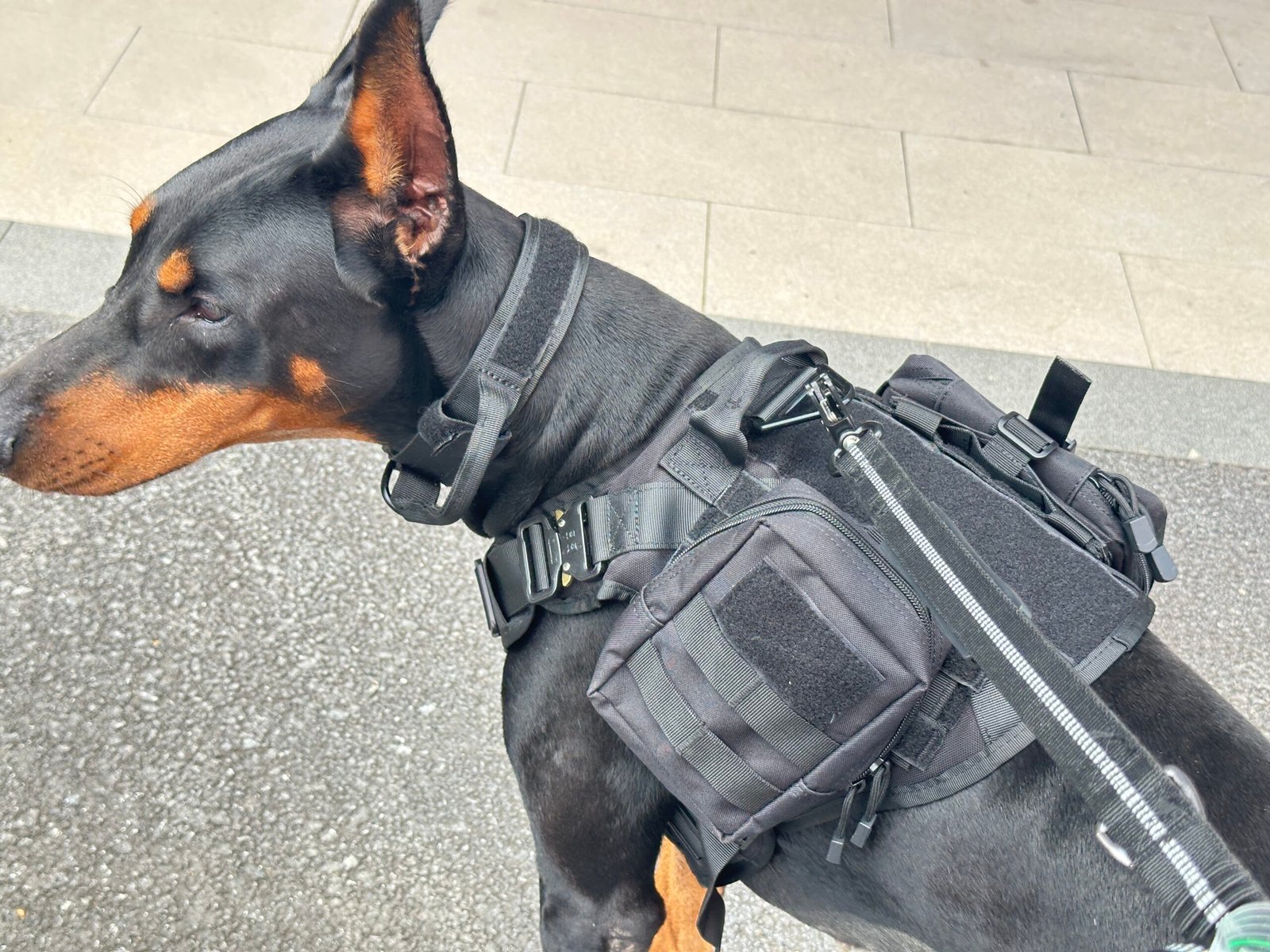
Best Tactical Dog Vest for Large Dogs: Fit, Materials and Sourcing
Large-Dog Tactical Vest Buyer Guide
The best tactical dog vest for a large dog is not the one with the most pouches or the heaviest-looking hardware. It is the one whose size range, strap layout, materials and attachment points match the intended use and can be checked on a real sample before purchase or bulk production.
What Makes a Tactical Dog Vest Suitable for Large Dogs?
Large dogs do not all have the same body shape. A German Shepherd, Belgian Malinois, Labrador, Doberman and Rottweiler may have different chest depth, neck profile and body length even when their weight is similar. That is why a breed label or a single “large” size is not enough for product selection or size grading.
A useful tactical dog vest should keep its main panel stable without blocking the front-leg area, twisting around the body or placing a buckle directly where it may rub. The adjustment system should offer enough range to fit the intended dogs while leaving usable strap length after adjustment.
Panel shape and strap position determine whether the vest stays centered during movement.
Handles, D-rings and pouches only help when their anchor points are integrated into the vest construction.
A size chart and tech pack should be verified against a physical sample before production approval.
The word “best” therefore describes fit for purpose, not one universal specification. A lightweight control harness, a MOLLE vest with removable pouches and a working-dog vest may need different panel coverage, padding and hardware.
Choose the Vest Type Before Comparing Features
Buyers often compare materials before deciding what the vest must do. A clearer process is to define the application first, then select the structure and components that support it.
| Vest type | Typical design priority | Points to check | B2B buying question |
|---|---|---|---|
| Adjustable control harness | Lower bulk and straightforward handling | Strap range, leash points, buckle access and front-leg clearance | Can the same pattern cover the planned size range without excessive loose webbing? |
| MOLLE tactical vest | Modular patches and removable accessories | MOLLE alignment, pouch position, weight balance and patch visibility | Are pouches included, optional or developed as separate SKUs? |
| Training or working-dog vest | Stable handling points and clear identification | Handle location, leash-point placement, panel stability and label/patch area | Which functions must be confirmed during the sample review? |
| Outdoor vest with storage | Balanced storage without unnecessary restriction | Pouch volume, left-right balance, zipper access and abrasion areas | Will the product be sold as a vest, a kit or a vest with optional pouches? |
Fit and Sizing Matter More Than a Breed Label
For a tactical dog harness for large dogs, the useful measurements normally begin with chest girth at the widest part of the rib cage, neck-base circumference and back or body length relevant to the vest panel. The exact measurement method should be shown in the product size guide so buyers and sample reviewers measure the same points.
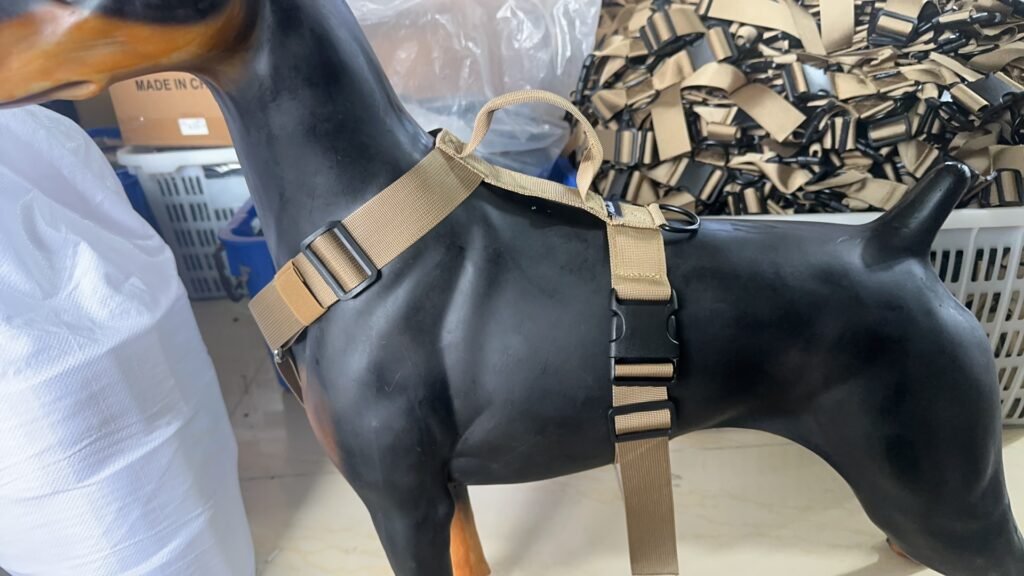
What a buyer should request in a size chart
- Finished-product measurement points, not only a list of breed examples.
- Minimum and maximum usable adjustment range for each size.
- Main-panel length and width where panel coverage affects fit.
- Clear instructions showing how chest, neck and body measurements are taken.
- A tolerance or approval method agreed during sampling for custom production.
What to check on the physical sample
Put the sample on dogs representing the intended size range where practical. Review whether the front legs can move without contacting the panel, whether straps remain flat, whether buckles can be reached, and whether the vest stays centered during normal movement. Record fit comments by sample size instead of using one general approval for the entire range.
Evaluate Materials as a System, Not a Denier Number
Fabric denier is only one input. A higher denier does not automatically make a finished vest better, and a material name alone does not confirm coating, weave, backing or sewing quality. Buyers should review the outer fabric together with lining, padding, webbing, thread, binding, buckles and reinforcement methods.
| Component | What to specify | What to inspect on a sample |
|---|---|---|
| Outer fabric | Material type, color, finish and intended abrasion exposure | Hand feel, color match, edge finishing and how the fabric behaves at seams |
| Lining and padding | Lining type, padding location and target thickness | Bulk at edges, coverage, trapped folds and contact areas |
| Webbing | Width, thickness, color and intended strap function | Adjustment friction, cut-edge finish and consistency across sizes |
| Buckles and adjusters | Material, dimensions, opening method, color and supplier reference if required | Ease of operation, strap compatibility, placement and assembly direction |
| Handle and leash points | Position, anchor construction and intended handling function | Stitch coverage, symmetry, access and connection to the main structure |
| Stitching and binding | Seam type, reinforcement areas, thread color and visual standard | Skipped stitches, loose ends, uneven lines, puckering and reinforcement placement |
Metal hardware is not automatically the correct answer for every vest, and plastic hardware is not automatically weak. The right choice depends on the component specification, product use, weight target, corrosion exposure and the verification method agreed for the project. Ask the supplier to identify the actual component rather than describing it only as “heavy duty.”
How to Review MOLLE Panels and Tactical Dog Vest Pouches
A tactical dog vest with pouches should be assessed as a complete layout. Pouch size, attachment method and left-right position affect how the vest sits on the dog. A large MOLLE field does not mean every available space should be filled.
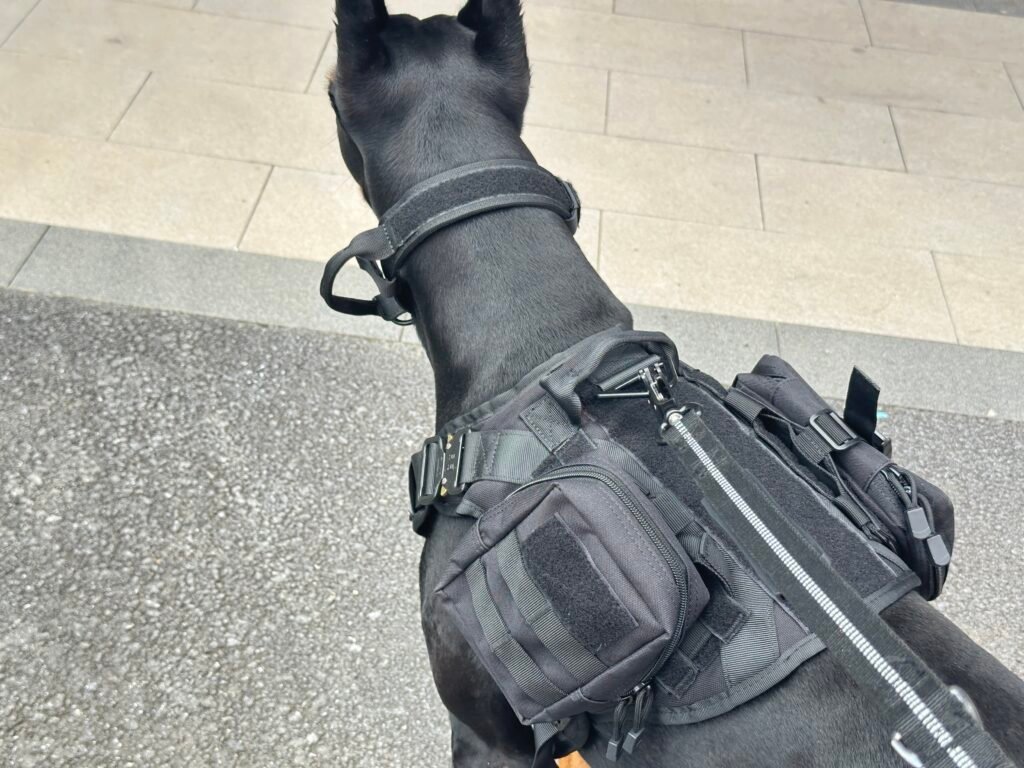
Buyers comparing available styles can review PANOAR’s K9 tactical vest kit, tactical dog harness with pouches and other products in the K9 tactical gear category. Product-page photos are a starting point; final specifications still need to be confirmed for the selected product and order.
B2B Sample Review Checklist Before a Bulk Order
A sample is useful when it answers specific approval questions. Send consolidated comments with marked photos, dimensions and component references so the revised sample can be compared with the previous version.
| Review area | Approval questions | Record to keep |
|---|---|---|
| Size and fit | Does each size match the agreed measurement method and adjustment range? | Size table, fit photos and approved measurement points |
| Pattern and symmetry | Are panels, straps, buckles and attachment points aligned as intended? | Front, side, back and top sample photos |
| Materials | Do fabric, mesh, padding, webbing and binding match the approved references? | Material swatches, color reference and component list |
| Hardware | Are buckle, adjuster, D-ring, clip and zipper references correct? | Close-up photos and hardware specification |
| Construction | Are reinforcement points, seam finishing and thread details in the approved locations? | Marked construction photos and workmanship standard |
| Branding | Are logo size, color, method and placement correct on every size? | Artwork file, placement guide and approved sample photo |
| Packaging | Are size labels, hang tags, barcodes, polybags and carton marks correct? | Approved packing reference and SKU list |
What Can Be Customized for Wholesale and Private-Label Orders?
Custom options should be treated as a specification package, not as a list of decoration choices. Each change may affect sample work, component sourcing, packaging and quotation details. Feasibility, MOQ and timing should be confirmed for the actual project rather than copied from a general page.
Panel shape, strap layout, handle position, leash points, MOLLE field and pouch set.
Outer fabric, lining, padding, webbing, binding, hardware and color direction.
Patch area, embroidery, woven label, size label, hang tag and packaging artwork.
For a coordinated K9 product line, use the Private Label K9 Gear page to plan branding, labels, packaging and repeat-order references. Keep this article focused on selecting and reviewing tactical dog vests; the commercial page handles the broader private-label program.
Information to include in an OEM tactical dog harness RFQ
- Reference product, clear photos, sample or tech pack.
- Target market and intended product use.
- Required size range and measurement method.
- Material, webbing, padding and hardware direction.
- Handle, leash-point, MOLLE, pouch and patch requirements.
- Logo artwork, label details and packaging plan.
- Target quantity by size and color.
- Destination country and required delivery window.
- Any testing, labeling or documentation requirement that must be quoted.
Frequently Asked Questions
What is the best tactical dog vest for large dogs?
The best option is the vest whose size range, adjustment system, panel coverage and attachment layout match the dog and intended use. Compare real measurements and sample fit instead of choosing only by breed, weight or appearance.
Is 1000D fabric always better for a tactical dog vest?
No. Denier does not describe the complete product. Buyers should review the fabric construction, finish, lining, padding, webbing, hardware, seam design and finished sample together. A heavier material may also add bulk that is unnecessary for some designs.
Should a large-dog tactical vest use metal or plastic buckles?
There is no universal answer. The correct choice depends on the actual component specification, intended use, weight target and verification requirements. Ask for the buckle reference and approve it on the sample rather than relying on the material label alone.
Can MOLLE pouches be added to a tactical dog harness?
They can be included when the vest has a compatible attachment layout. Buyers should confirm pouch dimensions, mounting method, zipper access, left-right balance and whether pouches are included with the vest or quoted separately.
Can a tactical dog vest be customized with a logo and packaging?
Logo patches, embroidery, woven labels, hang tags and packaging may be considered for private-label projects. The suitable method depends on the product surface, artwork, order plan and sample approval. Confirm feasibility and commercial terms for the specific project.
What should a wholesale buyer confirm before placing a bulk order?
Confirm the approved sample, size table, materials, hardware, construction details, logo placement, included accessories, packaging, quantity breakdown and inspection requirements. Keep these references together so the bulk order can be checked against the same approval package.
Prepare Your Tactical Dog Vest Project for Review
If you are sourcing a wholesale tactical dog vest or developing a private-label K9 harness, send the product reference and commercial details together. A clear RFQ helps the supplier review structure, custom options, sampling needs and quotation conditions without guessing.
- Product photos, sample or tech pack
- Size range and target quantity by color
- Material, hardware, MOLLE and pouch requirements
- Logo, labels, packaging and destination

[…] Best Tactical Dog Vest for Large Dogs when buyers are building a broader K9 gear line. […]
[…] Best Tactical Dog Vest for Large Dogs […]