
tactical-pouch-size-chart

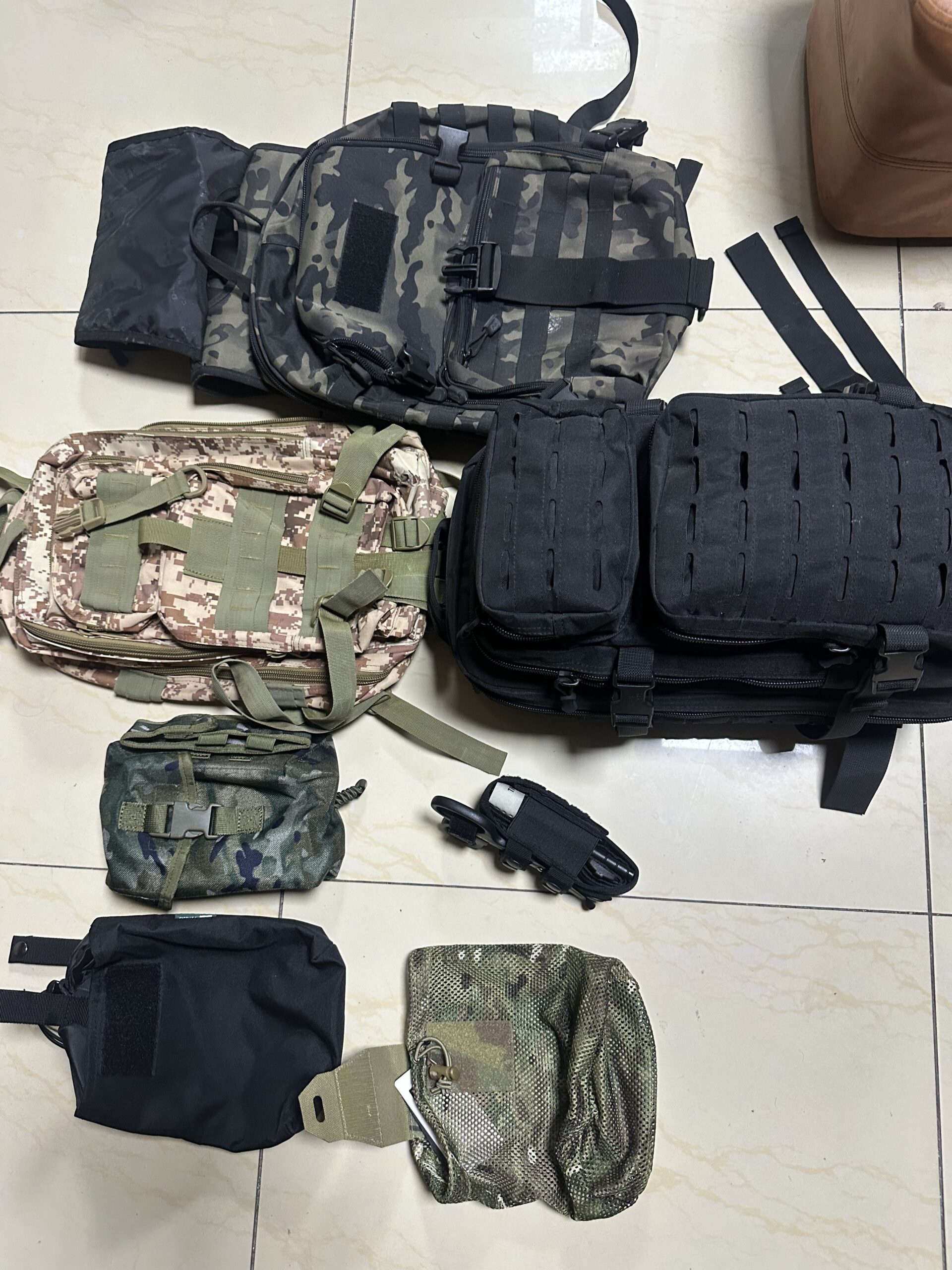
OEM pouch specification guide
Tactical Pouch Size Chart for OEM Buyers
A useful tactical pouch size chart is not just a list of inches. For an OEM buyer, dimensions affect MOLLE compatibility, usable storage, sewing difficulty, material waste, carton packing, sample cost, and whether the final pouch feels practical in the field.
This guide is written for importers, private label brands, distributors, and sourcing teams comparing admin pouch dimensions, utility pouch dimensions, IFAK pouch size, bottle pouch size, EDC organizer pouch dimensions, and custom utility pouch OEM specifications before sampling.
Quick Tactical Pouch Size Chart
The ranges below are practical starting points for OEM discussion. They are not fixed rules. A pouch for a retail EDC brand may need a cleaner silhouette, while a pouch for outdoor, range, medical, or working dog equipment channels may need extra depth, stronger webbing, or a more open internal layout.
| Pouch Type | Common Size Range | Typical MOLLE Footprint | Best Use | OEM Notes |
|---|---|---|---|---|
| Admin Pouch | 6-8 in W x 4-6 in H x 1-2 in D | 4-5 columns x 3-4 rows | Notebook, map, ID, pen, phone, small tools | Admin pouch dimensions should stay slim. Too much depth makes the pouch bounce on a chest rig or backpack panel. |
| General Utility Pouch | 5-8 in W x 6-9 in H x 2-3.5 in D | 3-5 columns x 4-6 rows | Tools, gloves, cables, batteries, compact outdoor items | Utility pouch dimensions should be based on the largest item inside, not only on the outside look. |
| Compact Utility Pouch | 4-6 in W x 4-6 in H x 1.5-2.5 in D | 3-4 columns x 3-4 rows | Small organizer, EDC, belt-mounted accessories | A good custom utility pouch OEM brief should define whether the pouch is belt-mounted, MOLLE-mounted, or both. |
| IFAK Pouch | 6-9 in W x 5-7 in H x 2-3.5 in D | 4-6 columns x 4-5 rows | Medical insert, bandage, gloves, shears, compact trauma items | IFAK pouch size depends heavily on the insert style. Tear-away panels and elastic loops change the internal space. |
| Bottle Pouch | 3.5-4.5 in diameter x 7-10 in H | 2-3 columns x 5-7 rows | Water bottle, small thermos, outdoor carry | Ask whether the buyer wants an open-top drawcord design or a zippered insulated bottle pouch. |
| Dump Pouch | 8-12 in W x 9-12 in H when open | 2-4 columns x 2-4 rows when folded | Temporary storage, gloves, training items, outdoor tools | The folded size matters as much as the open size. Bulky folded dump pouches are harder to sell online. |
| EDC Organizer Pouch | 5-8 in W x 4-6 in H x 1-2.5 in D | Optional MOLLE or none | Everyday tools, cables, travel items, small accessories | EDC organizer pouch dimensions should leave room for elastic loops, mesh pockets, and zipper clearance. |
| K9 Accessory Pouch | 4-7 in W x 4-7 in H x 1.5-3 in D | 2-4 columns x 3-5 rows | Waste bags, reward items, leash accessory storage, ID panels | For working dog gear, rounded corners and snag control are often more important than maximum capacity. |
Send your target item size, reference photo, material preference, and estimated quantity. PANOAR can review the pouch dimensions before sampling.
Ask for OEM Size ReviewHow to Measure Tactical Pouch Dimensions
Before requesting a sample, define whether your size means outer dimensions or usable internal space. This small detail prevents many sampling mistakes. Foam padding, seam allowance, zipper curves, binding tape, internal dividers, and elastic loops all reduce usable space.
Factory note
If the pouch must hold a specific item, send the item size with tolerance. For example, “tool body 150 x 70 x 35 mm, pouch should close easily with gloves.” That sentence is more useful than asking for a “medium utility pouch.”
MOLLE Pouch Dimensions: Rows, Columns, and Attachment Planning
MOLLE pouch dimensions are not only about width and height. The attachment footprint must also match the platform. Most MOLLE-compatible gear is built around PALS-style webbing references: 1 inch webbing, 1 inch vertical gaps, and approximately 1.5 inch horizontal stitch spacing. This is why a pouch can often move from a backpack to a vest, belt panel, or carrier without redesigning the whole attachment system.
For an OEM project, the key question is simple: how many MOLLE columns wide and how many rows tall should the pouch occupy? A pouch that looks good in a product photo can still feel wrong if the attachment straps are too short, the bartacks are misaligned, or the pouch is wider than the platform area.
| Attachment Detail | Practical Guideline | Why It Matters |
|---|---|---|
| Width planning | Estimate by MOLLE columns before finalizing pouch width. | Helps avoid awkward overhang on belts, backpacks, or side panels. |
| Height planning | Check the number of rows required for stable weaving. | Tall pouches need enough rows to reduce swinging and pull-away. |
| Strap length | Match strap length to the number of rows and material thickness. | Too short is hard to weave; too long creates loose attachment. |
| Back panel stiffness | Add reinforcement if the pouch carries weight or tools. | Soft back panels can sag even when the MOLLE layout is correct. |
| Belt compatibility | Decide early whether the pouch supports MOLLE, belt loop, or both. | Dual-use designs need different back construction and spacing. |
Sizing Notes by Pouch Type
Admin Pouch Dimensions
Admin pouches should usually stay flat. Buyers often want them to hold a phone, pen, notebook, ID card, small map, or compact tool, but if the pouch becomes too deep it can interfere with movement. For private label utility pouches sold online, a slimmer admin pouch also photographs better and looks cleaner on a backpack panel.
Utility Pouch Dimensions
Utility pouches are the most flexible category, which is also why they create the most confusion. A utility pouch can mean a tool pouch, organizer pouch, outdoor storage pouch, bottle accessory pouch, or MOLLE attachment pouch. The best starting point is not the pouch name. It is the item list: what must fit, how fast the user needs to access it, and whether the pouch should keep its shape when half full.
IFAK Pouch Size
IFAK pouch size should be planned around the medical insert and opening method. A clamshell pouch, tear-away pouch, and simple zip pouch can have similar outside dimensions but very different usable space. If trauma shears, gloves, bandage, or insert panels are required, define their position before sampling.
EDC Organizer Pouch Dimensions
EDC organizer pouch dimensions need balance. If the pouch is too compact, elastic loops become decorative rather than functional. If it is too large, it becomes a small bag instead of an organizer. For OEM buyers, the internal layout should be drawn at the same time as the outer size.
Bottle Pouch Dimensions
Bottle pouches should be built from the bottle diameter, not from a flat width estimate. A pouch designed for a slim bottle may fail with a wider insulated bottle. If the buyer wants insulation, drainage, drawcord closure, or one-hand access, the size and material stack need to change.
Material and Construction Notes for Custom Pouch Manufacturing
A tactical pouch OEM spec guide should connect size with construction. A larger pouch usually needs stronger back reinforcement, better zipper support, and more careful seam control. A small organizer pouch may need lighter fabric so it does not feel stiff or bulky.
| Component | Common Options | OEM Decision Point |
|---|---|---|
| Main fabric | 500D nylon, 1000D nylon, polyester, laminated fabric | Choose based on weight, abrasion needs, price target, and product positioning. |
| Lining | Polyester lining, mesh, hook-and-loop panel, no lining | Lining improves finish but adds cost and changes internal dimensions. |
| Webbing | Nylon webbing, polyester webbing, elastic webbing | Check width, thickness, color matching, and bartack placement. |
| Closure | Zipper, buckle, hook-and-loop, drawcord, flap | The opening style changes capacity, access speed, and sewing complexity. |
| Branding | Woven label, rubber patch, embroidery, printed label | Confirm logo size and placement before sample, not after bulk material cutting. |
For more material planning, see PANOAR’s guide to 500D vs 1000D nylon for tactical gear manufacturing.
Custom Pouch Manufacturing Checklist for OEM Buyers
A clean tech pack does not need to be complicated. It needs to remove guessing. Use this custom pouch manufacturing checklist before asking a supplier for price, sample time, or MOQ.
If you already have a reference sample, send photos from the front, back, side, inside, open position, and attachment side. For a custom utility pouch OEM project, these six photos often save more time than a long paragraph.
Use the quotation popup to send your photo, target size, material direction, logo method, and order quantity. A short but clear brief is enough to start the factory review.
Quotation RequestCommon Tactical Pouch Sizing Mistakes
- Only giving outside dimensions. The factory still needs to know what must fit inside.
- Ignoring depth. A pouch can have the right front size but fail because the depth is too shallow.
- Forgetting zipper clearance. A tight pouch may measure correctly but become difficult to open.
- Adding too many internal loops. More elastic does not always mean better organization.
- Choosing fabric before use case. A heavy fabric can make a small EDC pouch feel bulky.
- Not checking MOLLE footprint. A pouch should match the platform area, not just the product photo.
- Leaving packaging until the end. Retail packing can change folding, carton size, and final cost.
How PANOAR Helps With Private Label Utility Pouches
PANOAR supports OEM and ODM development for tactical pouches, organizer pouches, custom bags, waist bags, working dog gear, and related sewn products. Buyers can send a drawing, reference photo, physical sample, size target, logo file, packing idea, or rough product concept.
Our team reviews structure, material direction, MOLLE attachment, internal layout, logo process, packaging, MOQ, sample feasibility, and bulk production details. The goal is simple: turn a loose product idea into a quote-ready specification.
Need a pouch quote based on your target size?
Send your pouch type, dimensions, reference image, material preference, logo method, and estimated quantity. PANOAR will review the project and reply with a practical OEM direction.
Quotation RequestFAQ: Tactical Pouch Size Chart and OEM Specifications
What is the best size for a general utility pouch?
A common general utility pouch range is about 5-8 inches wide, 6-9 inches high, and 2-3.5 inches deep. The best size depends on the items inside, the platform, the attachment method, and whether the buyer wants a slim or high-capacity design.
How do I choose admin pouch dimensions?
Admin pouch dimensions should be based on the items the pouch must organize, such as phone, pen, notebook, ID, cable, or compact tool. Most admin pouches work better when they stay slim, usually around 1-2 inches deep.
What is a common IFAK pouch size?
A practical IFAK pouch size often falls around 6-9 inches wide, 5-7 inches high, and 2-3.5 inches deep. The insert style, opening method, and required medical contents should be confirmed before sampling.
Do MOLLE pouch dimensions need to match a standard grid?
Yes. MOLLE-compatible pouches should be planned around the attachment footprint, including MOLLE columns, rows, strap length, and back panel construction. Standard PALS-style references are commonly based on 1 inch webbing and approximately 1.5 inch stitch spacing.
Can PANOAR make custom utility pouches for private label brands?
Yes. PANOAR can support custom utility pouch OEM development with size planning, material selection, internal layout, MOLLE attachment, logo method, packaging, sample development, and bulk production follow-up.