
OEM vs ODM Tactical Gear: Which Is Better for Your Brand?

OEM buyer guide
OEM and ODM are two common ways to develop tactical gear with a factory. The right choice depends on how much of the product is already defined, how much control the buyer needs, and how quickly the project must move from idea to sample.
For tactical backpacks, MOLLE pouches, plate carriers, tactical belts, medical pouches, and K9 tactical gear, this decision affects sample work, material selection, logo placement, packaging, MOQ discussion, and the quality of the first RFQ.
OEM vs ODM Tactical Gear: The Short Answer
OEM means the factory produces a product based on the buyer’s own design, reference sample, drawings, or technical requirements. ODM means the buyer starts from an existing product direction or factory-developed base style, then makes practical changes for brand, market, or sales channel needs.
Both models can work for B2B tactical gear buyers. The mistake is choosing the model only by name. A project should be judged by design ownership, customization depth, sampling risk, launch timeline, and what the buyer can provide before the quote.
Practical rule: choose OEM if the product must be built around your own specification. Choose ODM if you mainly need a proven style adjusted for your brand, market, and packaging requirements.
Quick Model Selector
Choose the situation closest to your project. This is not a final quote rule, but it helps buyers prepare the right information before contacting a factory.
How OEM Works for Tactical Gear
OEM tactical gear manufacturing is usually used when the buyer wants a product made to a defined specification. The buyer may already have a tech pack, a sample from a previous supplier, product sketches, material requirements, or a clear feature list.
This model gives more control, but it also requires more decisions. For example, a custom tactical backpack may need pocket layout, fabric selection, zipper direction, MOLLE placement, padding, lining, binding, logo position, carton requirements, and sample approval rules. A plate carrier or K9 harness adds fit, reinforcement, hardware, and load-point questions.
OEM is usually better when:
- You own the product design or want a product developed around your own requirements.
- You need custom dimensions, MOLLE layout, pocket structure, attachment systems, or special construction.
- Your brand positioning depends on unique materials, hardware, logo placement, or packaging.
- You are replacing a supplier and need the new factory to match or improve an existing sample.
How ODM Works for Tactical Gear
ODM tactical gear manufacturing is usually used when the buyer wants to adapt an existing product direction rather than build every detail from the beginning. The buyer may select a base style, then adjust color, material, patch area, logo method, labels, packaging, or selected functional details.
This can be useful for importers, distributors, private-label buyers, and newer brands that need a faster development path. The tradeoff is that deep structural changes can turn a simple ODM request into an OEM development project.
ODM is usually better when:
- You want to test a product category before investing in a fully custom design.
- You need private-label branding on a factory-developed or existing style.
- You mainly need color, logo, label, packaging, or small layout changes.
- You want a simpler sampling path before planning a larger custom product line.
OEM vs ODM Comparison for B2B Buyers
| Decision Point | OEM Tactical Gear | ODM Tactical Gear | Buyer Note |
|---|---|---|---|
| Design ownership | Buyer provides the design, reference, or detailed requirement. | Buyer starts from a factory-developed or existing product direction. | Key difference |
| Customization depth | Higher. Size, structure, MOLLE, material, hardware, logo, and packaging can be reviewed together. | Moderate. Branding and practical adjustments are easier than full structural redesign. | Deep changes may require OEM sampling. |
| Sampling work | More detailed. The factory must check pattern, construction, materials, and approval criteria. | Usually simpler if the base style is close to what the buyer needs. | Both still need sample review before bulk order. |
| Best for | Established brands, product developers, private-label lines with unique specifications. | Importers, distributors, startup brands, and buyers testing a category. | Choose based on project readiness, not only budget. |
| RFQ requirements | Tech pack, sample, dimensions, material direction, logo files, estimated quantity. | Reference style, desired changes, logo method, packaging, quantity, target market. | Clear inputs lead to clearer factory feedback. |
Where Buyers Often Get Confused
Many sourcing conversations become unclear because the buyer asks for ODM pricing but expects OEM-level changes. Changing a logo or color is not the same as redesigning the body shape, pocket structure, shoulder system, MOLLE layout, reinforcement, or hardware position.
If a change affects pattern, sewing order, material thickness, fit, or load-bearing points, it should be discussed as development work. That does not mean the project is impossible. It simply means the factory needs better information before giving a useful quote.
Usually easier to review. Send logo file, label size, placement idea, and preferred logo method.
Usually practical, but fabric availability, MOQ, coating, hand feel, and color approval should be checked.
More sensitive. These changes can affect pattern, bartack placement, compatibility, sewing time, and sample approval.
Useful for private label and distributor orders. Confirm polybag, carton, barcode, label, insert card, and retail requirements.
Which Model Fits Common Tactical Gear Projects?
The right model depends on product maturity. A brand building a unique plate carrier or K9 harness may need OEM development. A distributor testing a tactical pouch line may start with ODM adjustments. A private-label buyer may begin with ODM, then move into OEM after the first market test.
| Product Type | Often Fits OEM When | Often Fits ODM When |
|---|---|---|
| Tactical backpacks | The buyer needs custom pocket layout, capacity, MOLLE panel, padding, or carry system. | The buyer wants to adjust an existing pack with logo, color, material, or packaging. |
| MOLLE pouches | The buyer needs a specific size, internal layout, attachment method, or medical/utility function. | The buyer wants to private-label a standard pouch style with smaller changes. |
| Plate carriers and tactical vests | The buyer needs defined fit, MOLLE layout, cummerbund, shoulder system, or hardware setup. | The buyer wants to adapt a base vest style for a market test or distributor line. |
| K9 tactical gear | The buyer needs custom sizing, handles, buckles, attachment points, padding, or working-dog fit. | The buyer wants logo, color, packaging, or light changes on an existing dog vest or harness direction. |
What to Send Before Asking for a Quote
A factory can give better feedback when the buyer sends the right starting information. You do not always need a finished tech pack, but the factory should not have to guess the product direction.
For an OEM request, prepare:
- Tech pack, drawing, reference sample, or marked-up product photos.
- Dimensions, product structure, material direction, and hardware preferences.
- Logo files, label requirements, packaging requirements, and target quantity.
- Sample expectation, timeline, and destination market.
For an ODM request, prepare:
- Base style or product reference you want to adapt.
- List of changes, such as color, logo, material, patch area, label, or packaging.
- Estimated quantity and whether this is a test order or repeat wholesale plan.
- Any must-have features that cannot be changed during sampling.

How PANOAR Reviews OEM and ODM Requests
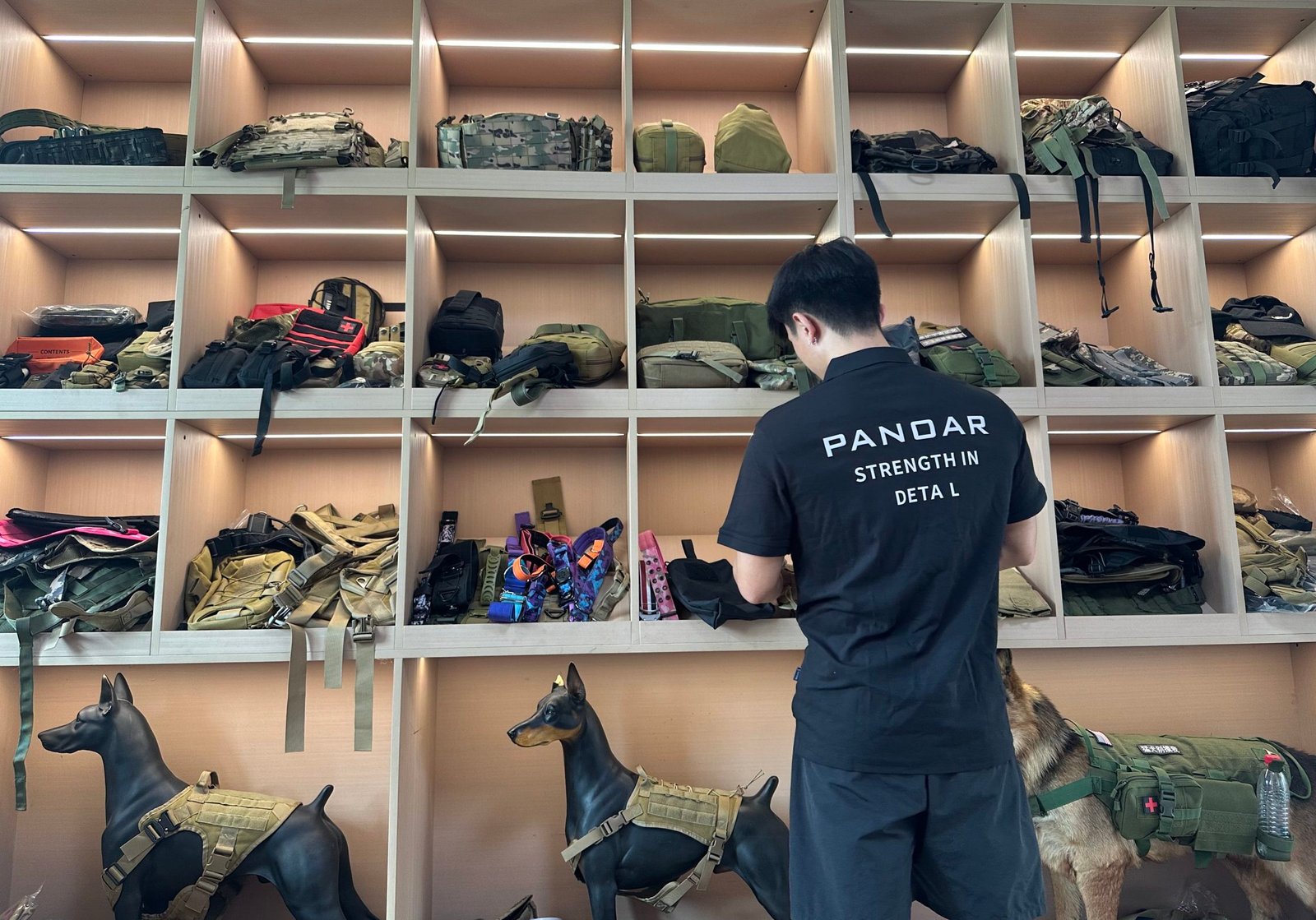
PANOAR is a China-based OEM/ODM tactical gear manufacturer for overseas B2B buyers. The factory reviews tactical backpack, tactical pouch, MOLLE equipment, medical pouch, plate carrier, tactical belt, and K9 tactical gear projects based on the buyer’s product brief, sample needs, customization direction, material and hardware choices, packaging requirements, and estimated quantity.
If the information is not complete, the first step is to clarify what is missing. A clear review at the beginning reduces repeated sampling, unclear pricing, and avoidable production risk.
Related Buyer Resources
- OEM/ODM Tactical Gear Manufacturing
- Request a Custom Tactical Gear Quote
- MOQ, Sample and Lead Time Guide
- Custom Materials and Hardware Options
- Tactical Gear Manufacturer
Not Sure Whether Your Project Is OEM or ODM?
Send product photos, a tech pack, a reference sample, or a short project brief. PANOAR can review the project direction and help confirm whether OEM development, ODM adjustment, or a sample review is the practical next step.
Send Project for Review View OEM/ODM ServicesFAQ
Is OEM better than ODM for tactical gear?
Not always. OEM is better when the buyer needs a product built around a specific design or requirement. ODM is better when the buyer wants to adapt an existing product direction with branding, material, color, packaging, or smaller functional changes.
Can an ODM project become an OEM project?
Yes. If the buyer starts with an existing style but requests deep changes to structure, size, MOLLE layout, fit, padding, or hardware placement, the project may require OEM-level sampling and review.
Do I need a tech pack before contacting PANOAR?
A tech pack is helpful, but it is not always required for the first review. Buyers can also send product photos, drawings, a reference sample, dimensions, and a clear list of requested changes.
Which model is better for private label tactical gear?
Private label buyers often start with ODM when they want branding and packaging on an existing product direction. If the private label line needs unique structure, fit, materials, or features, OEM may be more suitable.