
Custom Tactical Gear Materials & Hardware
Organize custom tactical gear materials, webbing, buckles, zippers, trims and construction requirements before sampling. PANOAR helps B2B buyers turn references and preferences into a clearer OEM/ODM project brief.
Availability, MOQ, testing scope, samples, timing and pricing are confirmed only after the complete project requirements have been reviewed.
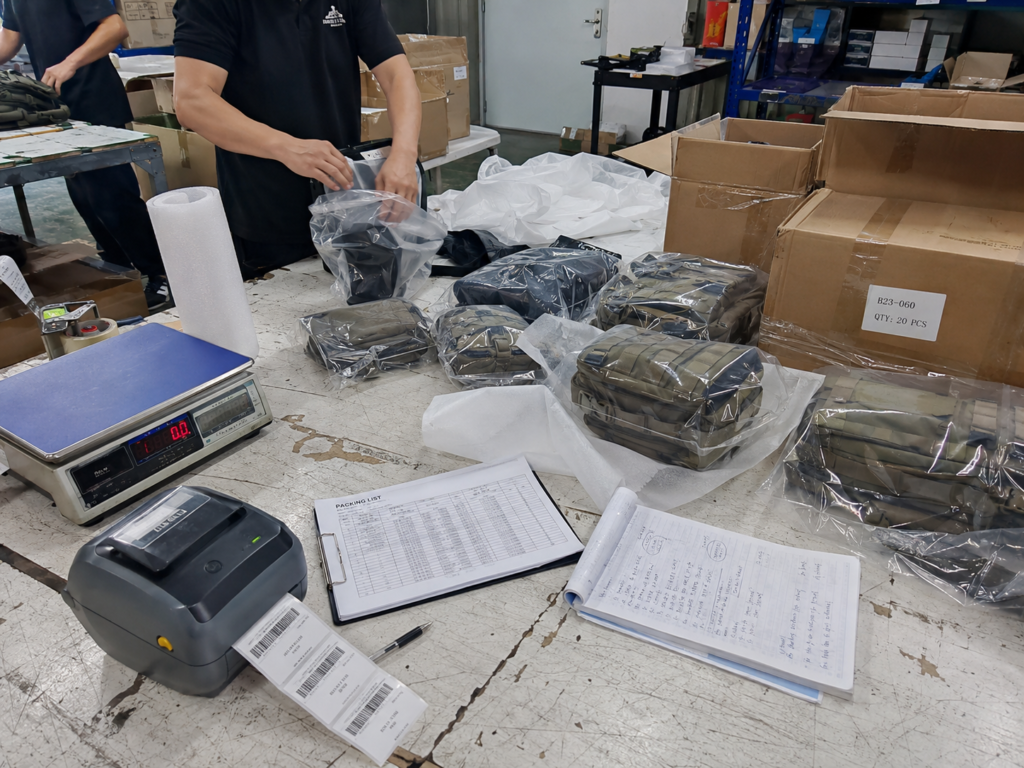
Start with the product requirement.
For custom tactical gear materials, a familiar material name is only one part of the decision. Intended use, product structure, color direction, adjoining components and documentation needs should be reviewed together.
- Outer fabric and lining: surface fabric, backing, internal layers and coating direction.
- Webbing and binding: width, route, attachment point and edge-finishing requirement.
- Buckles and hardware: component type, size, finish, connection method and adjustment logic.
- Zippers and pullers: opening path, zipper size preference, slider type and puller detail.
- Foam, mesh and trims: padding, ventilation, structure, labels and visible branding details.
Brand-name or equivalent options are reviewed by availability, quantity, color, cost, documentation needs and suitability for the specific project.
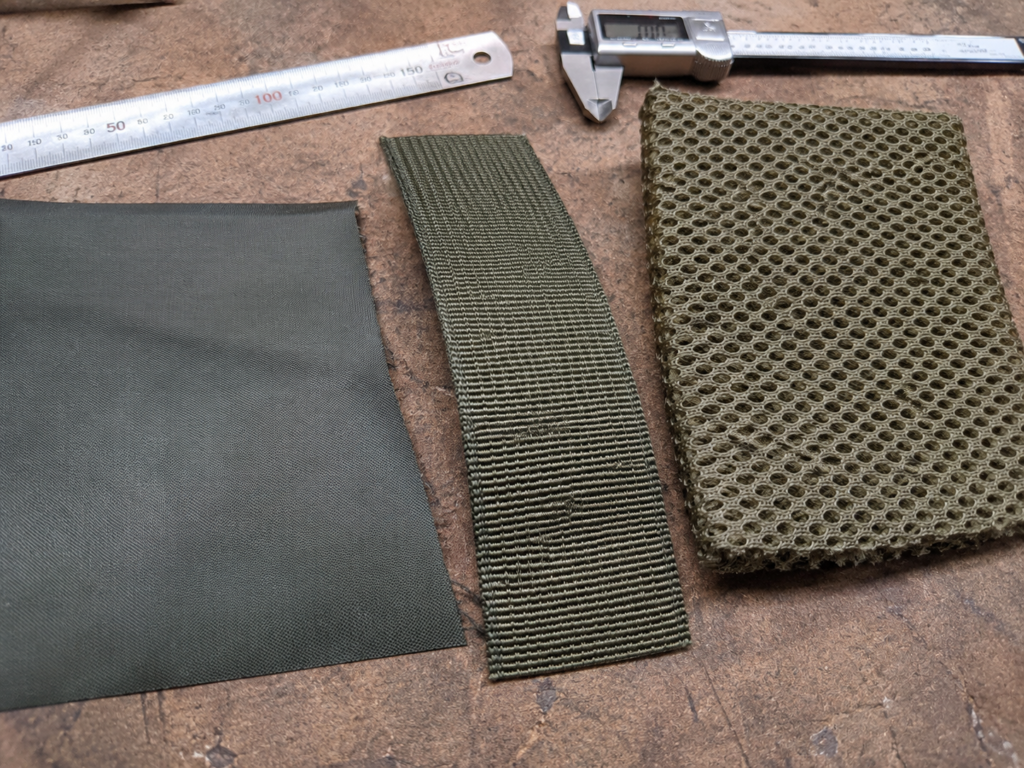
Connect each component to its location.
A zipper, buckle or binding choice becomes useful only when its position, dimensions, adjoining materials and intended function are understood. Close-up references help identify what an RFQ should describe.
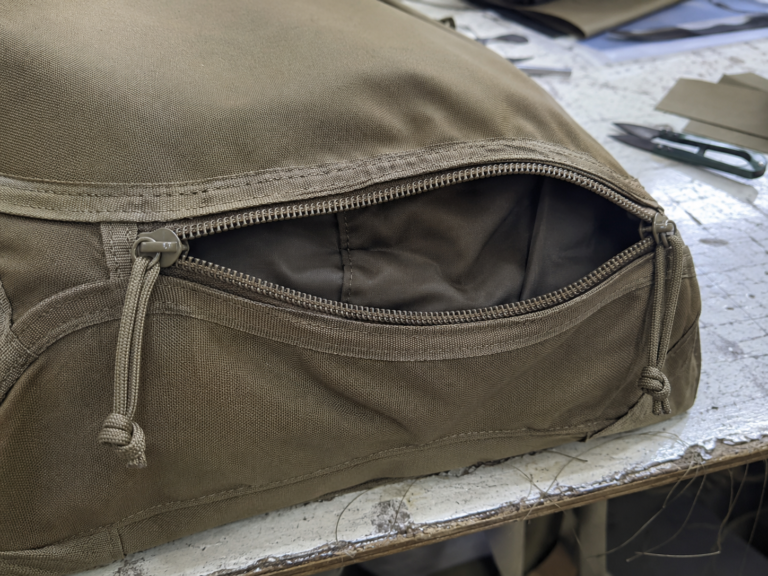
Zipper construction
Specify the opening direction, surrounding layers, zipper size preference and puller details.
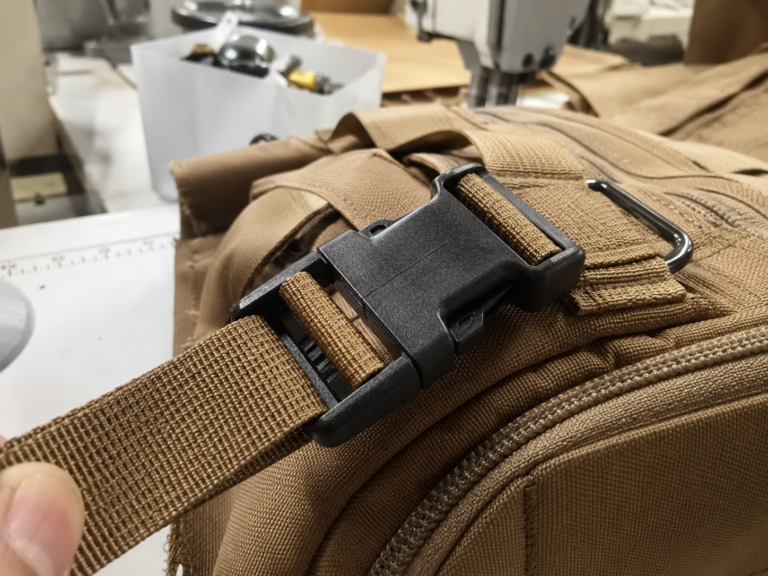
Buckle and webbing
Record component type, webbing width and how the connection is routed or adjusted.
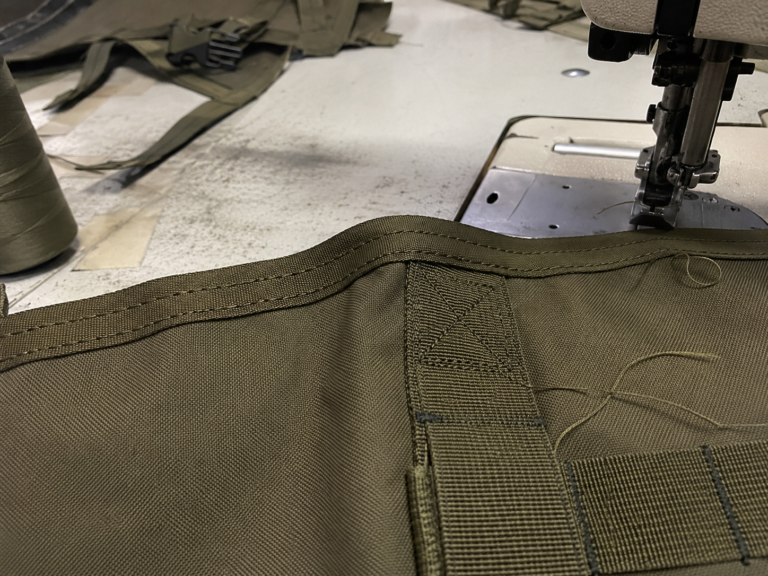
Binding and reinforcement
Identify edge treatment, seam route and the areas that require construction review.
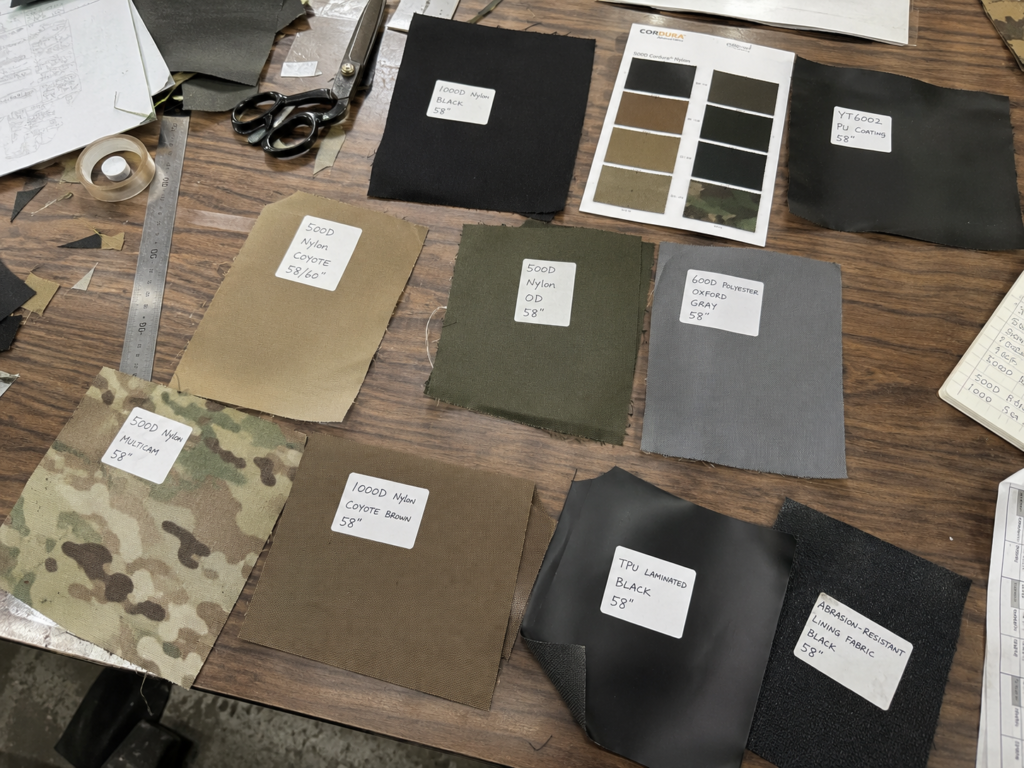
Reduce ambiguity before sampling.
Reference labels and comparison sets help distinguish required details from open alternatives. The selected combination still requires project review and sample approval.
Separate requirements
Mark fixed details and identify areas where alternative materials or components may be reviewed.
Compare combinations
Review color, texture, component fit and intended product placement together.
Record the direction
Keep reference files, labels and unresolved questions with the project brief.
Show the product, not only the material name.
A tech pack, marked-up drawing, reference sample or comparison photo gives the material discussion a product context. This makes it easier to identify missing dimensions, interfaces and finishing requirements.
For broader development steps, review the OEM/ODM Manufacturing page before sending a detailed RFQ.
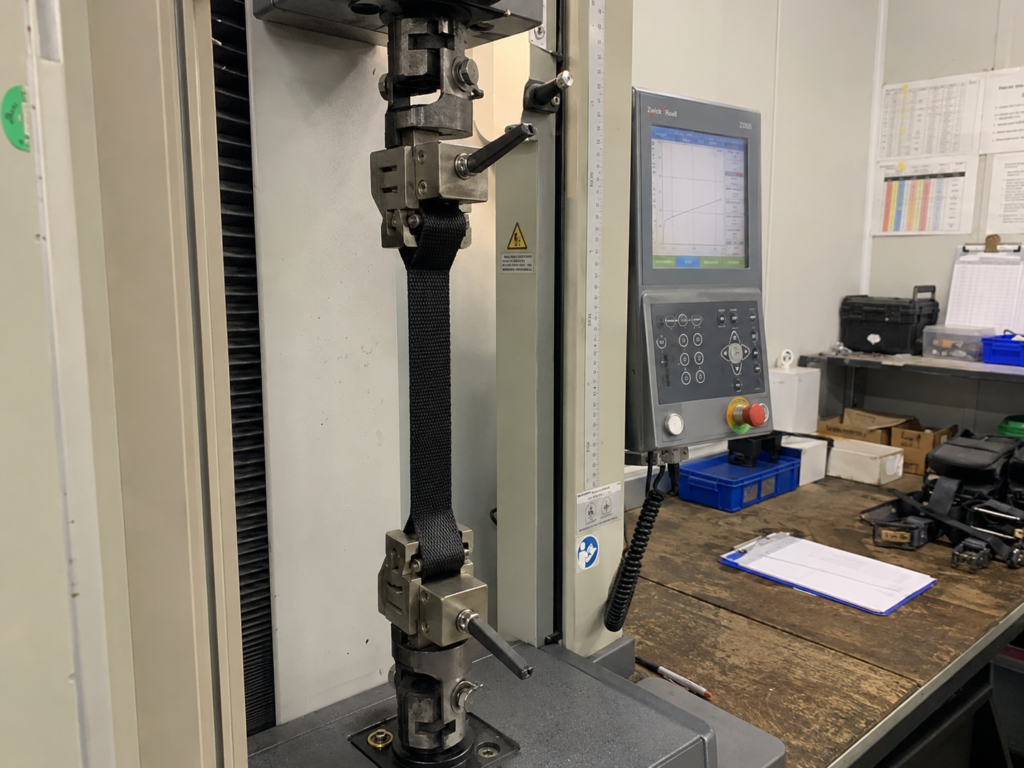
Define the requirement before the test.
If performance evidence is required, provide the intended use, specimen, test method, acceptance criteria and reporting format. A photograph of equipment does not establish compliance.
- State the test method or buyer document that should be reviewed.
- Confirm which material, webbing, buckle or finished product area needs checking.
- Clarify the required report format and acceptance criteria before arranging a test.
Send a materials inquiry that can be reviewed.
A complete brief helps identify what is fixed, what still needs sourcing review and what requires written confirmation.
Product type
Bag, pouch, carrier, K9 gear or another tactical soft-goods project.
Intended use
Application, environment and key construction priorities.
Estimated quantity
Expected order range for project-specific review.
Material preference
Reference fabric, color, webbing or hardware direction.
Reference files
Tech pack, drawing, sample photos or comparison products.
Testing and packing
Method, specimen, acceptance criteria, label and unit-packing needs.
Materials & hardware FAQ
Project details determine what can be confirmed for sourcing, samples, testing and quotation.
Can I request a specific material or hardware brand?
Can an equivalent material or hardware option be reviewed?
How is MOQ determined?
Can I request swatches or component samples?
Can testing be arranged for a custom tactical gear project?
Turn preferences into a reviewable specification.
Share the product type, intended use, estimated quantity, custom tactical gear materials preferences, reference files and destination so the project requirements can be reviewed.