
MOLLE Attachment Accessories Guide: Specifications, Sourcing & OEM/ODM Considerations
A professional guide to MOLLE attachment accessories. Learn about specs, material choices like 1000D nylon, OEM/ODM workflows, and sourcing from a factory with

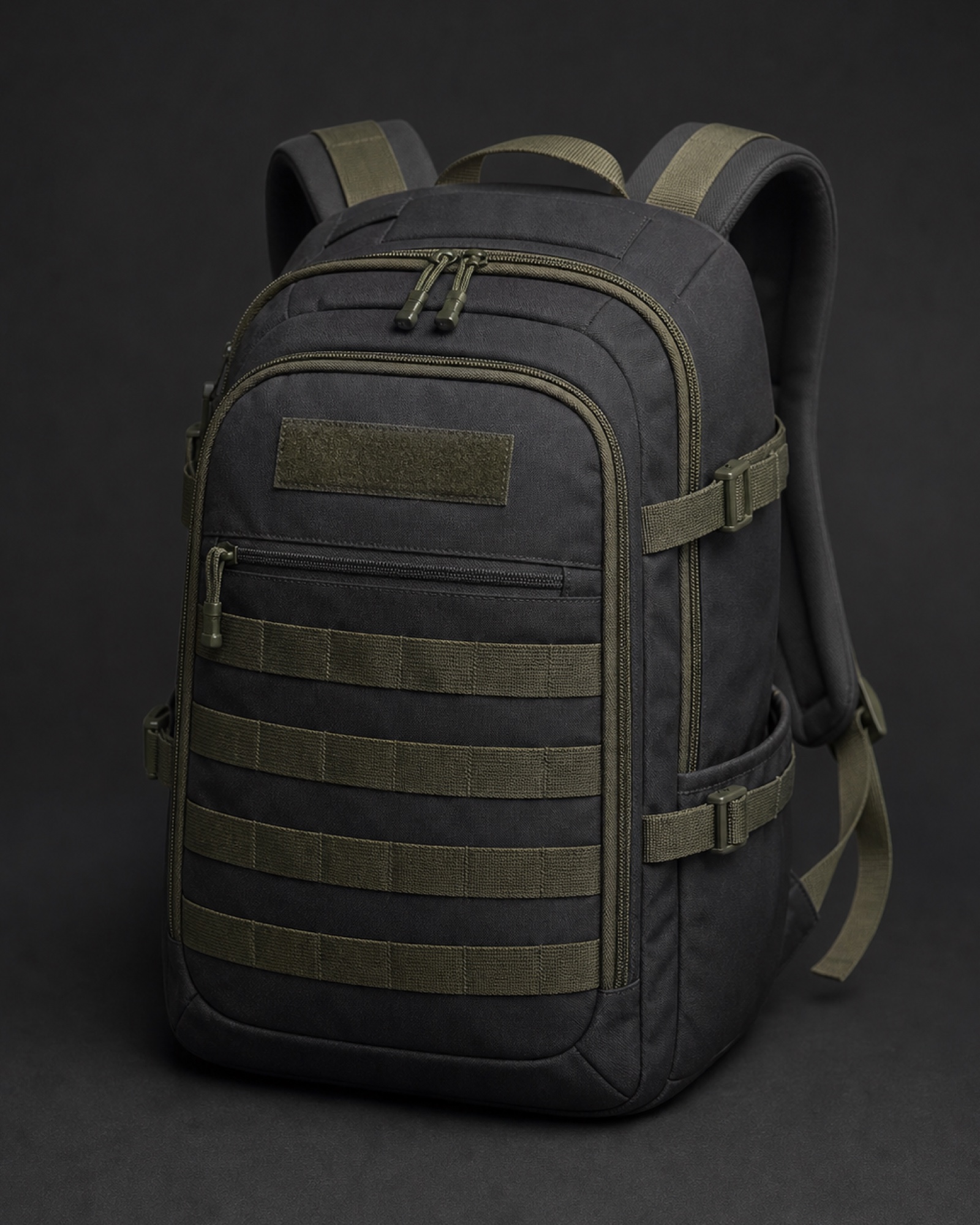
MOLLE Attachment Accessories Guide: A Sourcing and Specification Overview
For procurement managers and brand developers, the Modular Lightweight Load-carrying Equipment (MOLLE) system is more than a feature; it’s a foundational platform for product modularity. This guide to MOLLE attachment accessories provides a technical and sourcing-focused perspective, detailing specifications, material trade-offs, and the OEM/ODM development process. As a tactical gear OEM/ODM factory, Panoar’s analysis is grounded in production realities, from material selection like 1000D nylon to factory-level considerations such as a MOQ 300 pcs and adherence to Mil-Spec style construction.
Understanding MOLLE System Fundamentals
The MOLLE system’s value lies in its standardized grid of webbing loops. Compatibility is non-negotiable. Key specifications include webbing width (typically 1″ or 25mm), stitch count per inch (SPI), and the precise spacing between rows of webbing. Deviations here render accessories non-functional. For brands, this means your factory’s tooling and pattern-making must be calibrated to this universal standard. The initial development phase focuses on ensuring that prototype attachments—whether malice clips, straps, or modular panels—engage securely and slide smoothly within this grid without snagging or excessive play.
Material Selection: Durability vs. Weight Considerations
Material choice dictates performance, cost, and application. The decision is rarely binary but a balance of priorities.
- 1000D Nylon: The benchmark for heavy-duty applications. Its high denier count provides exceptional abrasion resistance and load-bearing capacity, ideal for utility pouches, medical kits, or equipment subjected to harsh environments. The trade-off is increased weight and a stiffer hand feel.
- 500D Nylon: Offers a favorable balance of strength and weight, suitable for general-purpose pouches, utility attachments, and where overall pack weight is a concern.
- Cordura or Equivalent: Specifying branded fabrics adds a marketing edge and guaranteed performance metrics but impacts cost and minimum order quantities. A factory should transparently discuss the cost-benefit of branded vs. high-quality generic fabrics.
- Polyester Webbing: For the MOLLE straps themselves, polyester is preferred for its minimal stretch and UV resistance compared to nylon webbing, ensuring long-term dimensional stability.
As a source factory, we advise clients to base material selection on the end-user’s actual duty cycle, not just marketing claims.
Key MOLLE Attachment Types and Specifications
Beyond simple straps, the ecosystem includes specialized components. Understanding their function informs better sourcing.
| Attachment Type | Primary Function | Key Specifications | Typical Material |
|---|---|---|---|
| Malice Clips | Secure, tool-free attachment/detachment | Wire gauge, plastic clip hardness, overall length | Spring steel wire, molded nylon |
| MOLLE Straps (1″ / 25mm) | Standard weaving attachment | Length, buckle type (ladderlock), webbing tensile strength | Polyester webbing, nylon buckle |
| Swift-Clip / Side Release Buckles | Rapid connection of modular components | Buckle size (e.g., 25mm), male/female compatibility | Molded nylon (UTX-standard) |
| Modular Panels (Adapter) | Convert non-MOLLE surfaces to MOLLE-compatible | Panel dimensions, attachment method (hook-and-loop, screws), row count | 500D/1000D nylon, laser-cut laminate |
| Shock Cord & Tensioners | Secure irregularly shaped items | Cord diameter, cord lock type, elasticity retention | Bungee cord, plastic cord locks |
The OEM/ODM Development Workflow: From Concept to Carton
Engaging a factory for MOLLE accessories requires clarity on your role. In an OEM model, you provide detailed tech packs (designs, specs, Bill of Materials). The factory executes precisely. In an ODM model, you provide a concept or performance requirement, and the factory handles design, material sourcing, and prototyping. The critical path for both is:
- Prototyping & Sampling: A 1-3 week process creating physical samples. This stage validates design, material hand-feel, stitching, and MOLLE compatibility. Expect 1-3 sample iterations for refinement.
- Pre-Production Sample (PP Sample): Once the prototype is approved, a PP sample is made using mass-production materials and methods. This is the final checkpoint before tooling is locked.
- Production & Quality Assurance: Full-scale manufacturing begins. A professional factory will conduct in-line inspections (checking stitch consistency, hardware application) and a final random inspection (AQL standard) before packing.
- Logistics: Goods are packed per instruction, with shipping terms (FOB, EXW, etc.) determining responsibility and cost.
For brands, a factory’s Mil-Spec style approach—emphasizing bar-tacking at stress points, straight stitch lines, and secure hardware attachment—is a reliable indicator of quality focus, even for commercial-grade products.
Sourcing Logic: MOQ, Lead Time, and Total Cost
Effective sourcing looks beyond unit price. A factory’s MOQ 300 pcs per SKU, for example, allows for manageable inventory risk for new brands while ensuring production efficiency. Lead time is typically 30-45 days from deposit receipt, covering material procurement, production, and QC. The total landed cost must factor in:
- Unit Cost (material + labor + overhead)
- Tooling/Mold Costs (for custom hardware)
- Shipping and Insurance
- Import Duties
Consolidating multiple accessory SKUs into a single production order can optimize per-unit costs and container utilization.
Conclusion: Strategic Sourcing of MOLLE Components
This MOLLE attachment accessories guide underscores that successful sourcing blends technical understanding with supply chain pragmatism. Whether you require heavy-duty 1000D nylon pouches or a full suite of modular attachment solutions, partnering with a factory that transparently discusses specifications, MOQs, and the OEM/ODM workflow is critical. The goal is to translate your product vision into durable, compatible, and cost-effective gear that meets your market’s demands.
Panoar supports OEM/ODM development for Pouches & Attachments with 1000D nylon options, MOQ 300 pcs, and a Mil-Spec-minded factory workflow.
Frequently Asked Questions (FAQ)
Q: What is the main advantage of 1000D nylon for MOLLE accessories?
A: 1000D nylon provides superior abrasion resistance and tear strength, making it the optimal choice for accessories subjected to heavy loads, frequent use, or harsh environments. It is a core material for professional and duty-grade equipment.
Q: As a new brand, can we develop a custom MOLLE attachment with a low quantity?
A: Yes. Our standard MOQ is 300 pieces per SKU, which is structured to accommodate smaller brands while maintaining production viability. The ODM process allows you to start with a concept, and we manage the design and prototyping to bring it to market efficiently.
Q: How do you ensure MOLLE compatibility across different product batches?
A: Compatibility is ensured through precise pattern-making and consistent use of calibrated tooling (e.g., 1″ webbing guides, specific presser feet). Our quality control includes physically testing attachment fit on standard MOLLE panels, a non-negotiable step in our Mil-Spec-inspired workflow.