
Everyday Carry Tactical Backpack Essentials: A B2B Guide to Specs, Layout, and OEM Sourcing
Explore everyday carry tactical backpack essentials for B2B buyers, from 500D/1000D nylon and layout specs to MOQ, lead time, and OEM options.

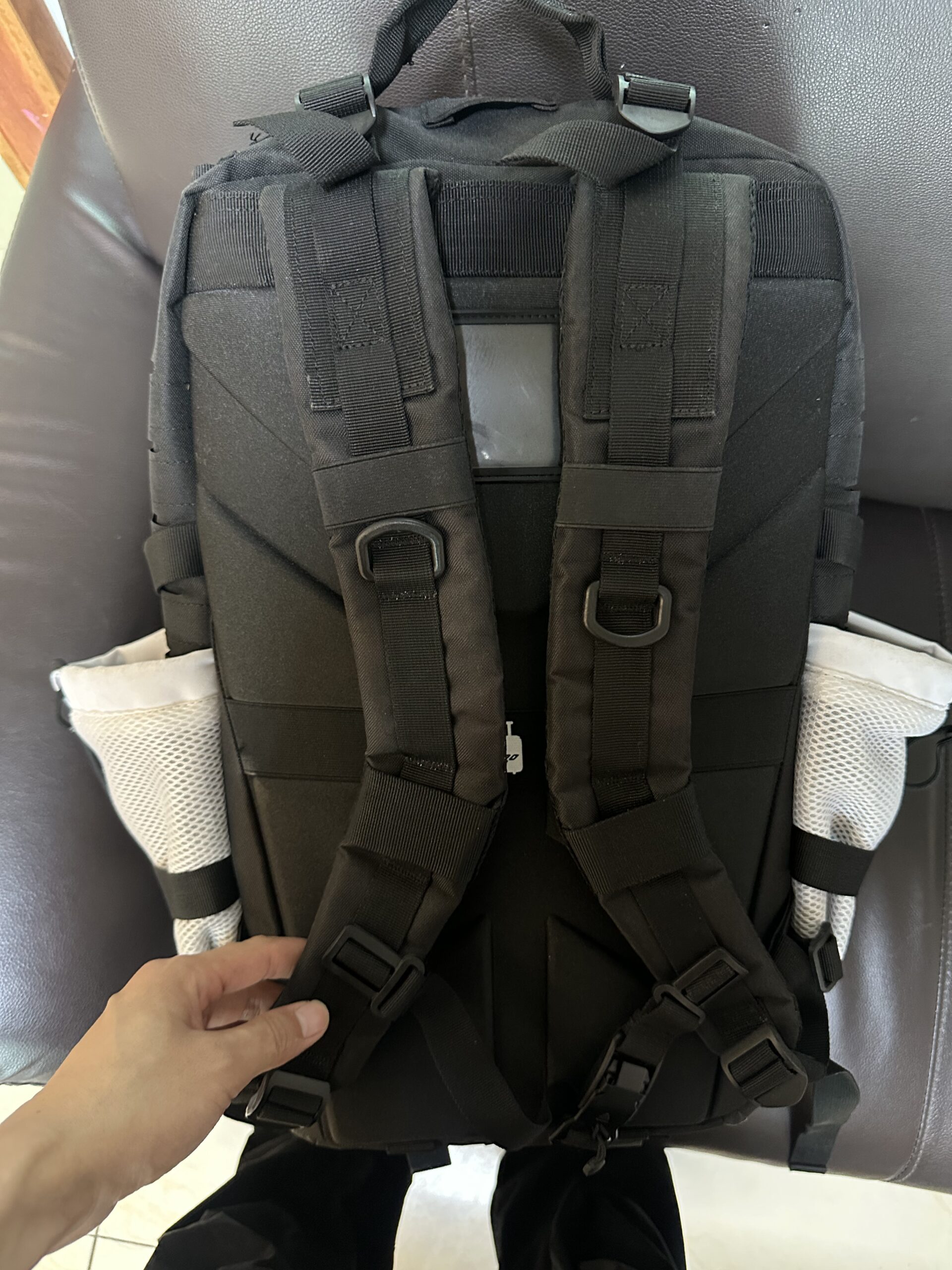
Everyday Carry Tactical Backpack Essentials: How B2B Buyers Should Balance Layout, Durability, and Retail Demand
For importers, outdoor distributors, and tactical gear brand owners, everyday carry tactical backpack essentials are no longer limited to military-style styling cues. The commercial opportunity now sits in practical crossover packs that handle commuting, laptop carry, vehicle use, range trips, and weekend travel without losing the rugged identity buyers expect from tactical gear. That shift changes the sourcing brief. A bag that looks aggressive but lacks workable pocket logic, stable shoulder construction, or scalable production control will not hold margin for long.
At Panoar, we evaluate this category as a source factory rather than a trend observer. The most successful EDC tactical backpack programs are built around repeatable specifications: the right denier for the target market, rational compartment planning, reinforced stress points, and hardware choices that survive daily opening cycles. As a China-based OEM/ODM manufacturer, we help B2B buyers decide when 500D nylon is enough, when 1000D nylon adds real value, and how flexible MOQ customization can support launch planning without overcomplicating the supply chain.
Why the EDC Tactical Backpack Category Has Become a Core Wholesale Opportunity
The modern EDC buyer wants one bag that can move between office, vehicle, airport, and light outdoor use. That means the product is judged against both tactical and lifestyle standards. If the pack is too heavy, it loses commuter appeal. If it is too minimal, it loses tactical credibility. If the internal layout is poorly planned, the end user sees the bag as bulky rather than functional. This makes the category attractive for B2B buyers, but only if the sourcing specification matches actual use behavior.
Retailers and private-label brands usually perform best when they position EDC tactical backpacks in the 18L to 28L segment. That size range fits laptops, tablets, chargers, admin gear, water bottles, and daily clothing layers while still remaining acceptable for urban carry. Buyers also gain a cleaner assortment strategy because one silhouette can be sold into commuter, outdoor, preparedness, and tactical channels with only moderate customization in color, webbing layout, and branding.
From a factory perspective, the best-selling programs are not the most complex ones. They are the models with disciplined compartment architecture, balanced fabric weight, and stable trim sourcing. Buyers who define the actual daily carry mission early usually reduce sample revisions, shorten development time, and improve sell-through once the product reaches market.
Everyday Carry Tactical Backpack Essentials: Core Specs Buyers Should Lock Before Sampling
Before a factory begins sample development, buyers should freeze the most commercial specifications. This avoids a common issue where a prototype looks good on first review but becomes too heavy, too expensive, or too complicated for repeat orders. For everyday carry tactical backpack essentials, the table below highlights the specs that usually determine whether a style can scale cleanly from sample room to production line.
| Spec Area | Typical Factory Range | B2B Buying Meaning | Production Impact |
|---|---|---|---|
| Capacity | 18L to 28L | Fits commuter, travel, and tactical crossover demand | Keeps freight and carton volume lower than full rucksacks |
| Shell Fabric | 500D or 1000D nylon | Controls weight, abrasion resistance, and price positioning | 1000D increases material cost and sewing stiffness |
| Laptop Sleeve | Fits 14 in to 15.6 in devices | Expands appeal beyond pure tactical users | Requires tighter dimensional tolerance in lining panels |
| Shoulder Padding | 8 mm to 12 mm EVA plus spacer mesh | Improves all-day wear comfort and reduces pressure points | Adds assembly time and affects bag thickness in packing |
| Webbing Width | 25 mm modular webbing | Maintains accessory compatibility and visual tactical identity | Needs stable spacing control during sewing |
| Zipper Size | No. 8 to No. 10 coil zipper | Supports smoother opening under repeated daily use | Higher grade trim lowers after-sales complaint risk |
| Recommended MOQ | 300 pcs per SKU | Lets new buyers test one style without excessive inventory | Supports efficient cutting, trim ordering, and QC planning |
| Lead Time | 7 to 15 days sample, 30 to 45 days bulk | Useful for launch calendar and replenishment planning | Depends on custom trim complexity and revision count |
Locking these points early gives the factory a usable development target. It also protects the buyer from hidden cost expansion later, especially when additional compartments, padding, or decorative webbing are added one revision at a time without reviewing the total weight and labor impact.
Material, Hardware, and Pocket Layout Choices That Affect Daily Use
One of the most important sourcing decisions is whether the bag is being sold as a duty-inspired commuter product or as a true heavy-use tactical item. A 500D main body often makes more sense for urban EDC because it lowers carrying weight and improves hand feel. A 1000D main body or reinforced bottom panel is more suitable when the product must survive vehicle deployment, abrasive ground contact, or high-friction travel use. Many buyers now choose a hybrid construction: 500D for the main shell and 1000D on base panels, front utility areas, or stress zones.
Hardware selection matters just as much. Side-release buckles should feel positive but not oversized. Zipper pulls need enough length for gloved access without looking loose or cheap. Internal admin organizers should separate chargers, tools, pens, and medical essentials, but too many small pockets can raise sewing time while reducing usable volume. In practice, the best EDC backpacks usually have one clamshell main compartment, one laptop compartment, one front admin zone, and two to three utility pockets that are deep enough to be useful.
This is where a Mil-Spec manufacturing mindset still adds value even for commercial products. Clean bartacks, reinforced top handles, straight webbing placement, and stable stitch density reduce the failure points that daily users notice first. Those details may not dominate a sales photo, but they strongly influence return rates and repeat-order confidence.
OEM and ODM Strategy for Brands Selling EDC Tactical Backpacks
For many buyers, the fastest path to market is not full custom development from zero. ODM is often more efficient when a brand already knows the target audience but still needs help defining the final panel structure, accessory placement, and manufacturing logic. A proven factory platform can shorten development time, especially when the silhouette already supports common EDC functions such as laptop carry, cable organization, quick-access front pockets, and side bottle storage.
OEM becomes more valuable when the buyer already has a stable design language and wants tighter control over measurements, logo methods, fabric shades, lining color, zipper pullers, or laser-cut webbing panels. In both cases, it helps to separate high-value customization from cosmetic complexity. For example, custom woven labels, branded zipper pullers, and a distinct front-panel layout usually add more commercial value than adding several low-use pockets that complicate sewing without improving the user experience.
A dependable workflow usually follows five checkpoints: briefing, first sample, revision round, pre-production sample, and bulk production QC. Buyers should approve not only dimensions and appearance, but also strap angle, handle comfort, pocket depth, foam density, and packing method. If these details are left vague, production can still be technically correct while the final bag feels wrong in real-world use.
How Buyers Should Control Cost, MOQ, and Freight Without Weakening the Product
In the EDC backpack category, the lowest ex-factory quote often hides compromises that surface later. Lighter foam can flatten quickly. Thin lining can tear around laptop sleeves. Low-cost zippers can fail after daily commuter cycles. For B2B buyers, the goal is not to buy the cheapest sample; it is to build a style that can be reordered at stable quality while keeping landed cost predictable.
MOQ planning is also part of product design. A baseline of 300 pcs per SKU is practical for many tactical backpack programs because it aligns material ordering with efficient cutting and sewing. Flexible MOQ customization can become more realistic when several SKUs share the same shell fabric, lining, zipper supplier, and webbing color. This is why smart buyers often build a coordinated family of products rather than isolated one-off items. A shared trim package reduces inventory pressure and simplifies replenishment.
Freight should be discussed before the design is locked. Excessively thick back panels, rigid inserts, and overbuilt external pockets can push carton volume higher than expected. A bag that looks premium on the sample table may become less competitive once shipping is included. Good factories raise this early, because a product that is slightly more efficient to pack can outperform a heavier style even if the unit price difference appears small.
What Reliable Factory Execution Looks Like After the Sample Is Approved
Sample approval is only the midpoint of a healthy sourcing process. Long-term buyers should look for repeatable control in pattern cutting, panel alignment, bartack placement, logo application, and final inspection. EDC tactical backpacks may not be military issue products, but they still benefit from process discipline usually associated with heavier-duty manufacturing.
At source-factory level, that means clearer revision records, stable trim sourcing, and in-line inspection that checks measurement tolerance before the goods reach final packing. It also means communication that translates buyer language into production language. When a buyer says “sleeker profile” or “more daily-carry friendly,” the factory should convert that into concrete adjustments such as reduced pocket depth, lighter foam, simplified webbing coverage, or a narrower front panel.
Conclusion: Everyday carry tactical backpack essentials are not just a list of features. For B2B buyers, they are a sourcing framework that combines rational layout, suitable fabric weight, durable hardware, and disciplined factory execution. The best results come from treating the bag as a scalable product system: define the carry mission, choose 500D or 1000D nylon based on actual use, lock the commercial specs before sampling, and partner with a manufacturer that can support OEM/ODM development with flexible MOQ customization and stable quality over repeat orders.
Panoar supports OEM/ODM development for Tactical Packs & Bags with 1000D nylon options, flexible MOQ customization, and a Mil-Spec-minded factory workflow.
Frequently Asked Questions (FAQ)
Q: Is 1000D nylon necessary for every EDC tactical backpack project?
A: Not always. Many daily-carry programs perform better with 500D main fabric because it keeps weight lower and improves user comfort. A hybrid structure with 1000D on high-wear areas is often the better commercial choice.
Q: What capacity is most practical for a wholesale EDC tactical backpack?
A: For most commuter and crossover tactical markets, 18L to 28L is the most workable range. It supports laptop carry, accessories, and day-use storage without making the bag too large for routine daily use.
Q: What should buyers confirm before bulk production begins?
A: Buyers should approve the pre-production sample, material spec, zipper grade, foam thickness, logo method, color standard, packing details, and measurement tolerance. These points protect consistency across repeat orders.