
Tactical Dog Harness for Large Working Breeds: Fit & Construction Guide

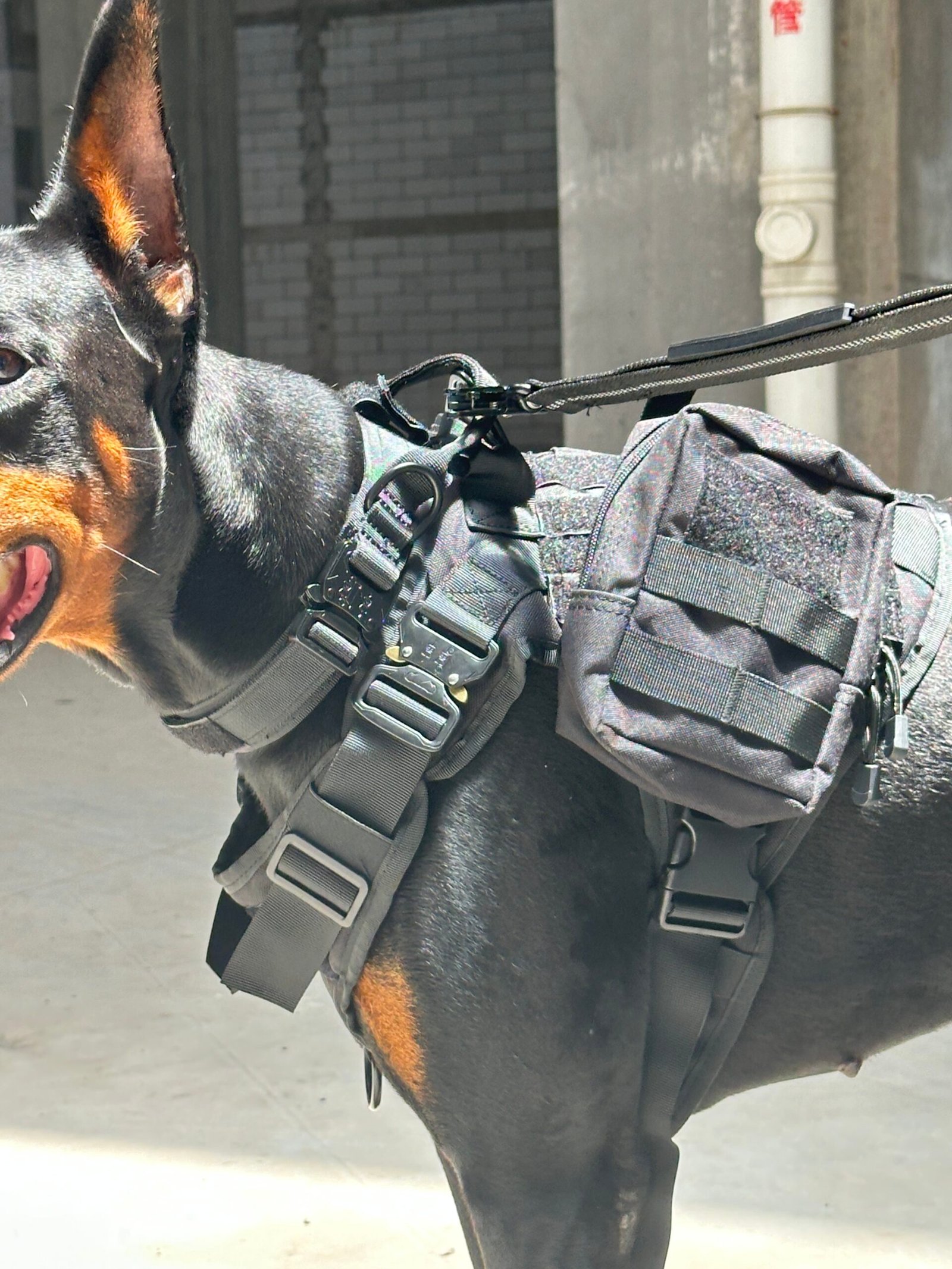
Working dog harness guide
Choosing a tactical dog harness for a large working breed starts with fit, construction, comfort and control. The harness should stay in the intended position while the dog moves, without creating avoidable rubbing or restricting the shoulder area.
This guide helps handlers, K9 gear buyers and product teams compare a harness before purchase, sampling or a larger order. It focuses on practical inspection points rather than unsupported strength ratings or one universal “best” design.
What Should a Tactical Harness Solve for Large Working Dogs?
A tactical harness for a large working dog should provide a stable connection point, clear adjustment, practical handling access and enough freedom for normal movement. The design also needs to match the dog’s body shape and the intended use, because a harness with a large accessory panel may behave differently from a lighter control-focused design.
“Tactical” is not a substitute for a product specification. Before selecting a harness, define the intended working context, the required attachment points, the size range and the conditions in which the sample will be reviewed.
Buyer checkpoint: separate visible features from verified construction. A MOLLE panel, handle or metal component should be reviewed together with its attachment, reinforcement, fit and intended use.
How to Check Fit on a Large Working Dog
Begin with the measurement method rather than the size label. Record where chest girth and neck measurements are taken, then compare the finished dimensions and adjustment range with the dog or the approved size chart.
- Check that the chest area sits in the intended position without pressing into the throat.
- Check neck and shoulder clearance before asking the dog to turn, walk or change direction.
- Look for rubbing around the front legs and underarms, especially after movement.
- Check whether the harness rotates, slides forward or creates gaps when the dog moves.
- Use a short walking or movement check before reviewing the fit under any added accessory load.
A two-finger fit check can be used as a basic comfort reference for some harness designs, but it is not a universal safety rule. Strap width, padding, dog body shape and the manufacturer’s fitting instructions can change the correct adjustment. Stop the review if the dog shows rubbing, breathing difficulty, pain or restricted movement, and seek qualified guidance where needed.
Construction Points: Webbing, Stitching, Handles and Hardware
Inspect the construction as a system. A material name or hardware label alone cannot confirm how the finished harness will behave.
| Area | What to inspect | What to confirm with the supplier |
|---|---|---|
| Webbing | Width, routing, edge finish, attachment position and contact with the dog. | Webbing specification, color, stitch plan and size variation. |
| Stitching | Seam alignment, reinforcement, bartack or box-X details where relevant. | Reinforcement locations and the approved sample standard. |
| Handle | Grip position, clearance, connection to the body and whether it shifts independently. | Handle material, anchor construction and intended handling use. |
| Hardware | Buckles, adjusters, rings, clips, finish and access during fitting. | Component type, dimensions, finish and approved source requirements. |
| Reinforcement | Stress-point coverage, edge binding and how the load path is distributed through the pattern. | Reinforcement locations and sample inspection points; do not assume a load rating without product-specific evidence. |
| MOLLE attachment | Panel placement, rows, stitch connection, usable space and interference with movement or adjustment. | Layout, spacing reference, accessory plan and areas that must remain clear. |
Comfort, Control and Shoulder Mobility
Comfort is not only a soft lining. Review the relationship between chest coverage, strap routing, padding, shoulder clearance and the dog’s range of motion.
Observe the harness unloaded first, then repeat the movement check with the accessories that the product is actually intended to carry. Look for shoulder restriction, underarm rubbing, chest pressure, balance changes and strap movement. A design that looks stable while standing may still rotate or interfere with movement when the dog turns or walks.
For a product program, record these observations in the sample comments instead of using broad claims such as “all-day comfort” or “mission ready.”
MOLLE Attachments and Weight Considerations
MOLLE creates attachment space, but it does not by itself prove that every pouch or load is suitable for every dog or harness. Define the intended accessories, panel position and movement clearance before finalizing the product.
Do not use a fixed body-weight percentage as a universal rule. The suitable load depends on the dog, health, conditioning, harness design, accessories and working context. For safety-sensitive use, follow veterinary or qualified handler guidance and confirm the product-specific requirements.
For technical spacing context, see the MOLLE webbing spacing guide. The final attachment layout still needs to be checked against the selected harness pattern.
Common Selection Mistakes
- Choosing a camouflage style or accessory count before checking fit and movement.
- Assuming a material label proves the strength of the complete harness.
- Reviewing the handle separately from its anchor and the harness body.
- Adding pouches without checking balance, shoulder clearance and adjustment access.
- Accepting a size label without recording measurement points and finished dimensions.
- Using a supplier’s general claim instead of reviewing the actual sample.
How to Compare a Harness Before Buying or Sampling
Use the same checklist for each reference so the comparison stays focused on the product role rather than marketing language.
- Define the dog size range, measurement method and intended working use.
- Mark the required chest, neck, belly, handle and leash attachment points.
- Record webbing, stitching, reinforcement, hardware, padding and lining requirements.
- Map MOLLE rows, patch space and planned accessories against movement areas.
- Review the sample unloaded and during controlled movement.
- Approve the size, color, logo, packaging and sample comments before a larger order.
How Panoar Fits the Supplier Checklist
For a general product inquiry, the K9 Tactical Gear category is the natural product-level next step. A branded or custom project can then be sent through the Request for Quote page with the reference photos, measurements, materials, quantity and sample checkpoints.
Frequently Asked Questions
What should I check first on a tactical dog harness for a large working breed?
Check the measurement method, adjustment range, chest and neck position, shoulder clearance, underarm rubbing and whether the harness rotates during controlled movement.
How should a working dog harness be reviewed for construction?
Review the webbing, stitch alignment, reinforcement, handle attachment, hardware and MOLLE connection on the actual sample or approved reference. Ask the supplier to confirm specifications that are not visible.
Is a MOLLE panel suitable for heavy accessories?
Not automatically. Confirm the panel construction, attachment method, accessory plan and product-specific evidence before treating it as suitable for a particular load or use.
How do I check whether a harness restricts shoulder movement?
Observe the dog walking and turning in the fitted harness. Check shoulder clearance, underarm rubbing, chest pressure, rotation and changes in range of motion. Stop if the dog shows discomfort or restricted movement.
What should a buyer send when requesting a custom working dog harness?
Send the reference product or drawing, size range, measurement method, materials, hardware, handle and leash-point requirements, MOLLE layout, logo files, quantity, packaging needs and sample checkpoints.
Prepare a Working Dog Harness RFQ
Share the harness reference, size plan, construction details, intended accessories and sample requirements so the project can be reviewed against its actual product brief.