
Heavy Duty Dog Collar for Strong Breeds: Engineering, Safety, and Performance Analysis

K9 Collar Wholesale Sourcing
This heavy duty dog collar for strong breeds guide is written for importers, K9 gear distributors, private-label pet equipment brands and OEM buyers who need to compare collar width, webbing, padding, buckle systems, handles, color options and RFQ details before sourcing in bulk.
What B2B Buyers Need to Decide First
A heavy-duty dog collar article can easily become a consumer buying guide. For importers, distributors and private-label buyers, the decision is different. The buyer needs to define the SKU, confirm the sample specification and decide how the collar will fit into a broader K9 product range.
A buyer is not only asking, “Is this collar strong?” The real sourcing questions are: which collar type should become the SKU, which hardware fits the price level, what sizes and colors are needed, what logo method is realistic, and what should be checked before approving a sample.
Quick Comparison: Heavy Duty Dog Collar Types
Start by deciding which collar direction fits your product line. The best option for a bulk order depends on the buyer’s channel, target dog size, expected use and customization requirements.
| Collar Direction | Best Fit for B2B Buyers | Sample Checks |
|---|---|---|
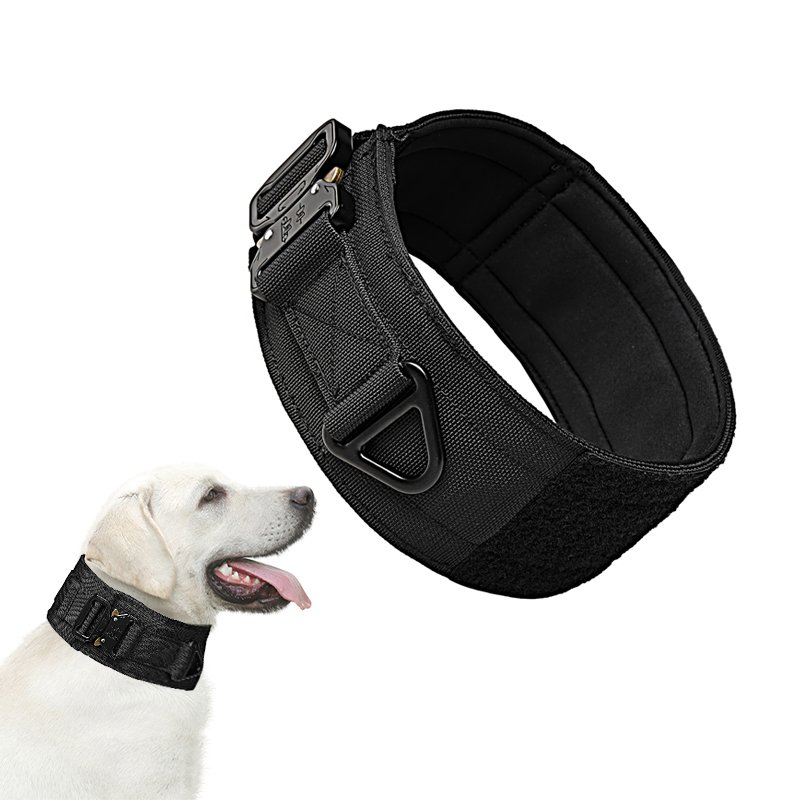
| Extra-wide tactical dog collar | K9 gear distributors and tactical-style pet brands that want a stronger visual product position. | Check width, padding, buckle size, D-ring placement, edge binding and size adjustment range. |
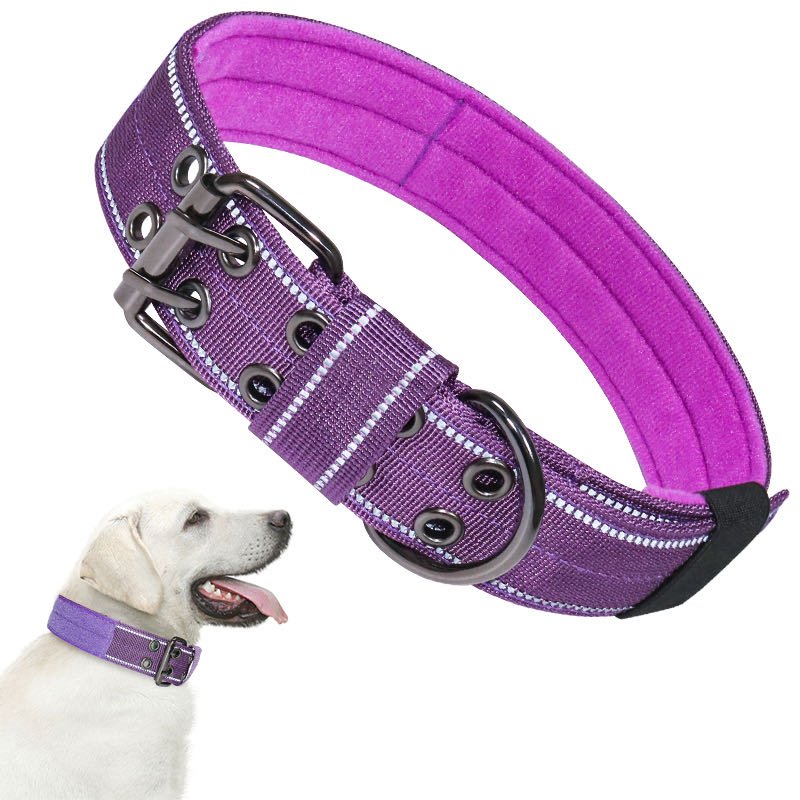
| Padded heavy-duty collar | Outdoor pet brands and private-label programs that need comfort-focused positioning. | Check lining material, stitching around padding, reflective detail, hole spacing and buckle finish. |
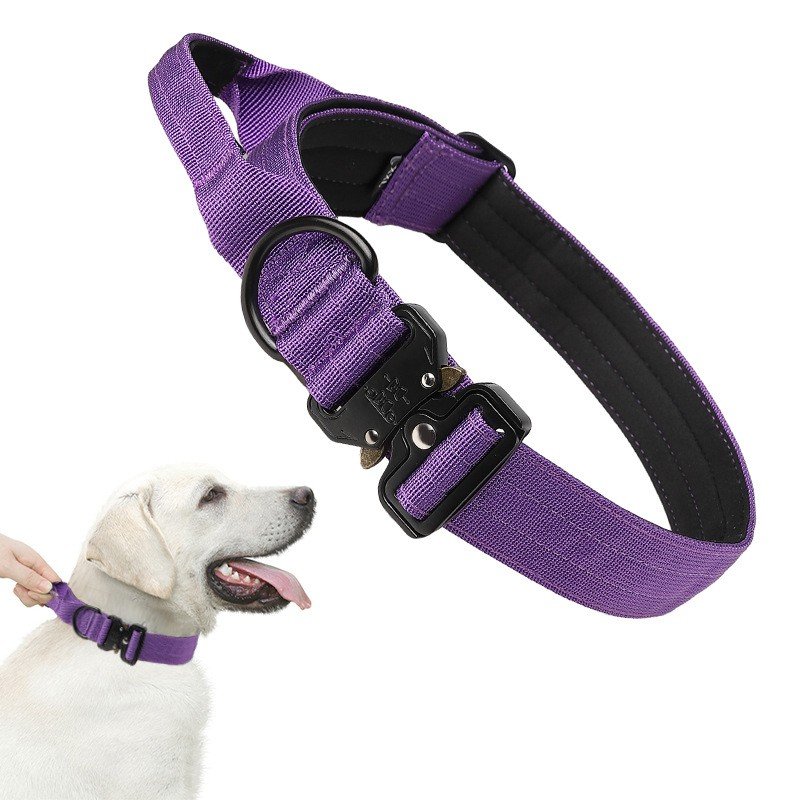
| Tactical collar with handle | Working-dog, training and close-control product lines where a handle is part of the SKU story. | Check handle placement, stitching reinforcement, handle height, leash ring position and hand clearance. |
| MOLLE or reflective tactical collar | K9 tactical gear lines that want collar, vest, leash and accessory items to share a consistent visual style. | Check webbing layout, reflective material, color consistency and whether the collar fits the rest of the K9 range. |
Product Details Buyers Should Confirm Before Sampling
A heavy duty dog collar for strong breeds should be reviewed as a system. The webbing, padding, buckle, D-ring, adjustment method, stitching and branding all affect whether the final SKU feels suitable for bulk buyers.
Material and Hardware Choices Affect the Product Line
Buyers should not only ask for a “strong collar.” That wording is too vague for an RFQ. A clearer brief should specify fabric or webbing direction, lining material, buckle type, ring placement, colorways, reflective details and the target product tier.
| Specification Area | What to Decide | Why It Matters |
|---|---|---|
| Outer webbing | Nylon webbing, camouflage direction, solid color, reflective detail or buyer-specified material. | It affects appearance, hand feel, color consistency and the buyer’s product positioning. |
| Padding / lining | Neoprene-style lining, soft padded panel or simpler non-padded construction. | The lining changes comfort positioning and sample approval comments. |
| Buckle system | Quick-release metal buckle, double-prong metal buckle or other buyer-specified hardware. | Hardware affects price level, weight, appearance and how the buyer describes the product. |
| Handle option | No handle, low-profile handle or raised handle for close control. | Handle placement changes collar use case, sewing requirements and product photography needs. |
| Private-label details | Woven label, rubber patch, printed label, hang tag, custom packaging or color-specific SKU plan. | Branding and packaging should be discussed before samples so the SKU can be quoted properly. |
For broader material and trim decisions, buyers can review custom materials and hardware before preparing the final RFQ.
Turn Selection Points Into RFQ Details
Advice such as “choose the right collar” is not enough for a wholesale buyer. Each selection point should become a clear RFQ detail, so the supplier can review the sample direction more accurately.
Where PANOAR Fits This Buyer Checklist
A buyer checklist should not make the reader suspicious and then leave them alone. For heavy-duty K9 collar projects, PANOAR can review the buyer’s reference photo, target collar width, size range, material direction, buckle preference, handle requirement, logo method, packaging plan and estimated order quantity before confirming the next quotation step.
This article should link buyers to the right commercial pages instead of trying to close every question inside one blog post. Use the Dog Harnesses & Collars category for product browsing, Private Label K9 Gear for branding and packaging projects, and Request for Quote when the buyer is ready to send specifications.
Related PANOAR Pages for Collar Buyers
These pages help buyers move from product comparison to private-label planning, sample discussion and RFQ.
- 3 Inch Tactical Dog Collar for an extra-wide collar product reference.
- Heavy Duty Padded Dog Collar for padded and reflective collar positioning.
- MOLLE Reflective Dog Collar for tactical-style collar range planning.
- Tactical Dog Collar with Handle for close-control handle collar projects.
- Best Tactical Dog Vest for Large Dogs when buyers are building a broader K9 gear line.
- OEM/ODM Manufacturing for custom tactical gear development.
- MOQ, Sample & Lead Time before finalizing sample or bulk-order questions.
RFQ Checklist for Heavy Duty Dog Collar Orders
Before requesting a quote, prepare the details below so PANOAR can review the project more clearly.
- Target collar type: extra-wide, padded, reflective, MOLLE-style, handle collar or another structure.
- Reference photo, drawing, current product link or physical sample if available.
- Target sizes, collar width, adjustment range and number of size/color SKUs.
- Material direction, lining preference, buckle type, D-ring requirement and handle requirement.
- Logo method, label placement, patch direction, hang tag and packaging requirements.
- Estimated order quantity and whether the project is a new SKU or a repeat line extension.
- Target sales channel, such as distributor, private-label brand, K9 gear seller or outdoor pet equipment range.
Turn a Collar Idea Into a Clear RFQ
Send PANOAR your collar type, reference photos, target quantity, size range, material direction, buckle preference, logo plan and packaging needs. A clearer RFQ helps the supplier review whether the heavy-duty dog collar project fits wholesale or private-label production.
FAQ
What makes a dog collar heavy duty for wholesale buyers?
For wholesale buyers, a heavy-duty dog collar should be defined by specifications such as webbing direction, collar width, buckle type, D-ring placement, lining, stitching and size range, not only by product wording.
Which heavy duty dog collar style is best for strong breeds?
The best style depends on the buyer’s product line. Extra-wide collars, padded collars, reflective collars and handle collars can all work if the width, hardware, lining and sample checks match the target SKU.
Can heavy duty dog collars be customized for private label?
Yes. Buyers can discuss logo method, woven label, rubber patch, color direction, buckle finish, packaging, hang tag, barcode label and carton marking before sampling.
Should buyers choose a collar or harness for K9 product lines?
Collars and harnesses serve different product roles. Many K9 gear ranges include collars, leashes and harnesses together, so buyers should decide whether the collar is a standalone SKU or part of a larger K9 tactical gear line.
What information should I send for a heavy duty dog collar quote?
Send the collar type, reference photo, target sizes, width, quantity, color plan, material direction, buckle preference, logo method, packaging details and destination market requirements.