
The Ultimate Guide to Choosing the Best Tactical Dog Vest for Large Dogs (2026 Edition)

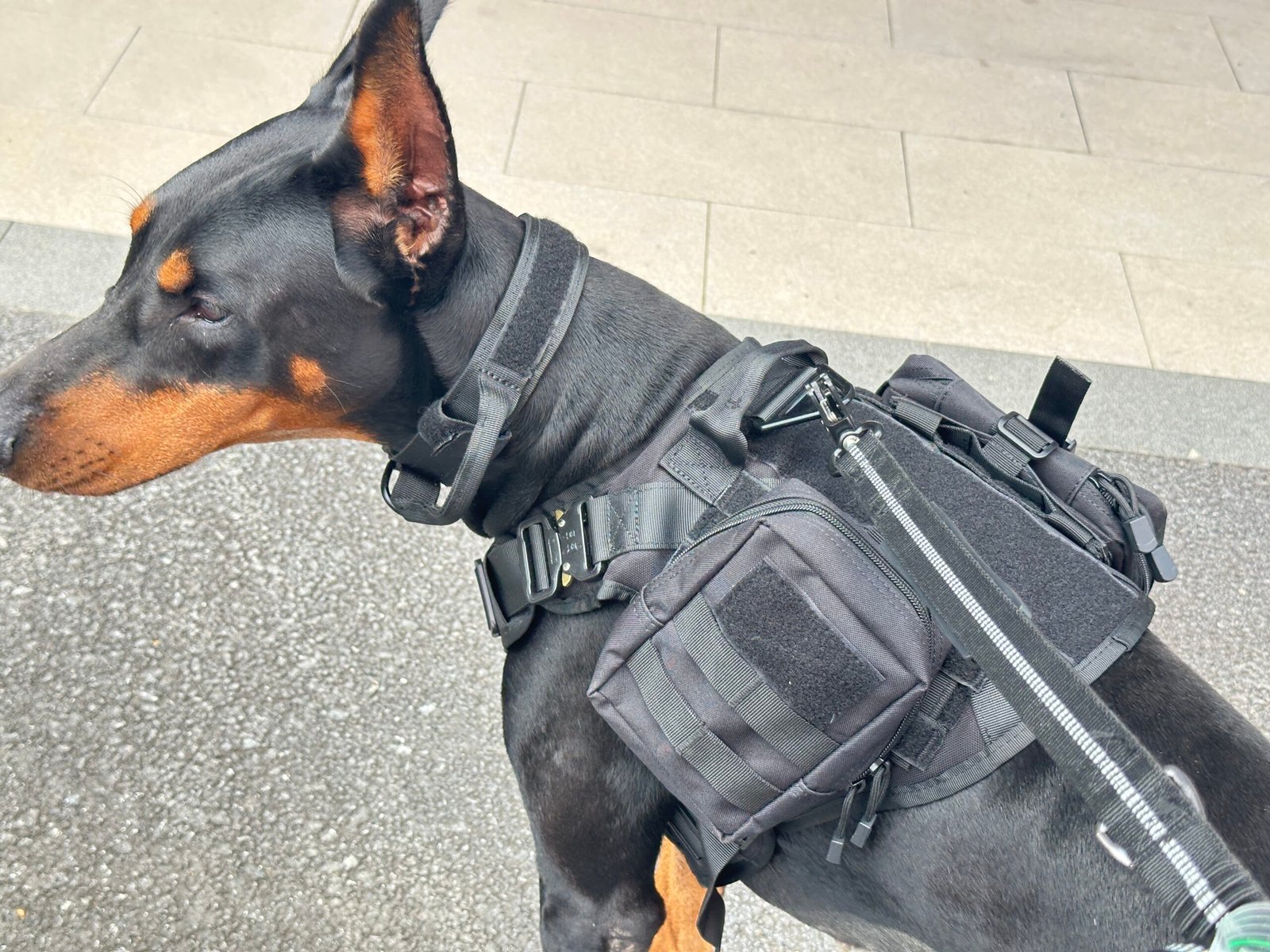
Large breed dogs are powerful, energetic, and often highly trainable. But their strength also exposes the weaknesses of standard dog gear. A poorly constructed harness can fail under pressure, cause discomfort, or reduce handler control.
A well-designed tactical dog vest can solve these problems – but only if you choose the right style.
This guide breaks down everything you need to know before buying the best tactical dog vest for large dogs, including materials, structural design, load capacity, sizing precision, and real-world usage scenarios.
Understanding the Purpose of a Tactical Dog Vest
A tactical dog vest is not just a stylistic alternative to a regular harness. It is a load-bearing control system inspired by military MOLLE (Modular Lightweight Load-carrying Equipment) platforms.
Its design priorities are:
Structural durability
Force distribution
Modular attachment capability
Emergency control access
Outdoor resilience
For large breeds such as German Shepherds, Belgian Malinois, Labradors, Dobermans, Rottweilers, and similar working dogs, these features are practical necessities—not cosmetic upgrades.
Why Large Dogs Require a Different Standard of Harness
1. Pulling Force
A 70–90 lb dog can generate sudden forward force that easily exceeds the stress tolerance of lightweight harnesses. Failure typically occurs at:
Plastic buckles
Single-line stitching
D-rings under torsion stress
Heavy-duty tactical dog vests are engineered to withstand higher tensile loads.
2. Neck and Spine Safety
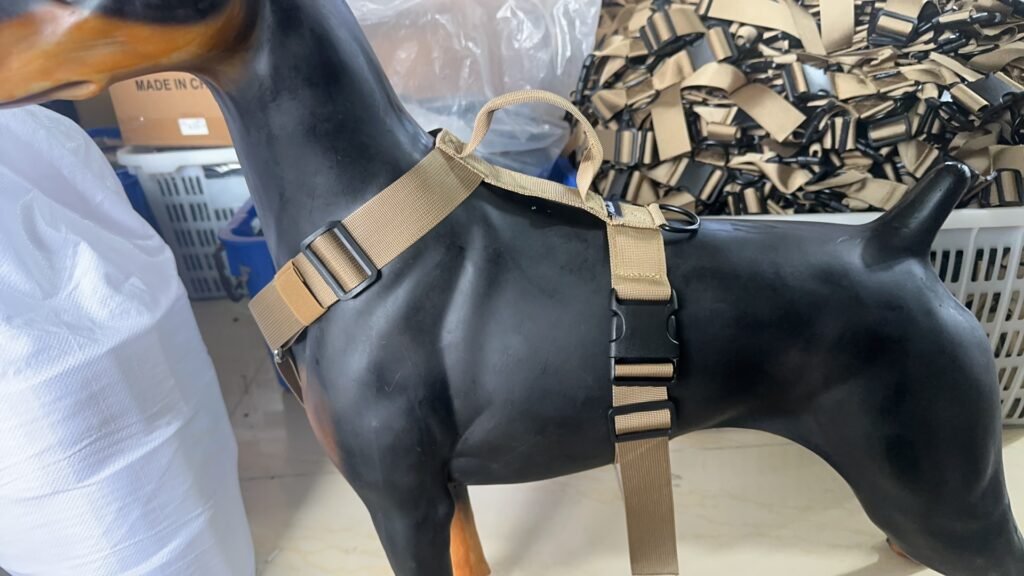
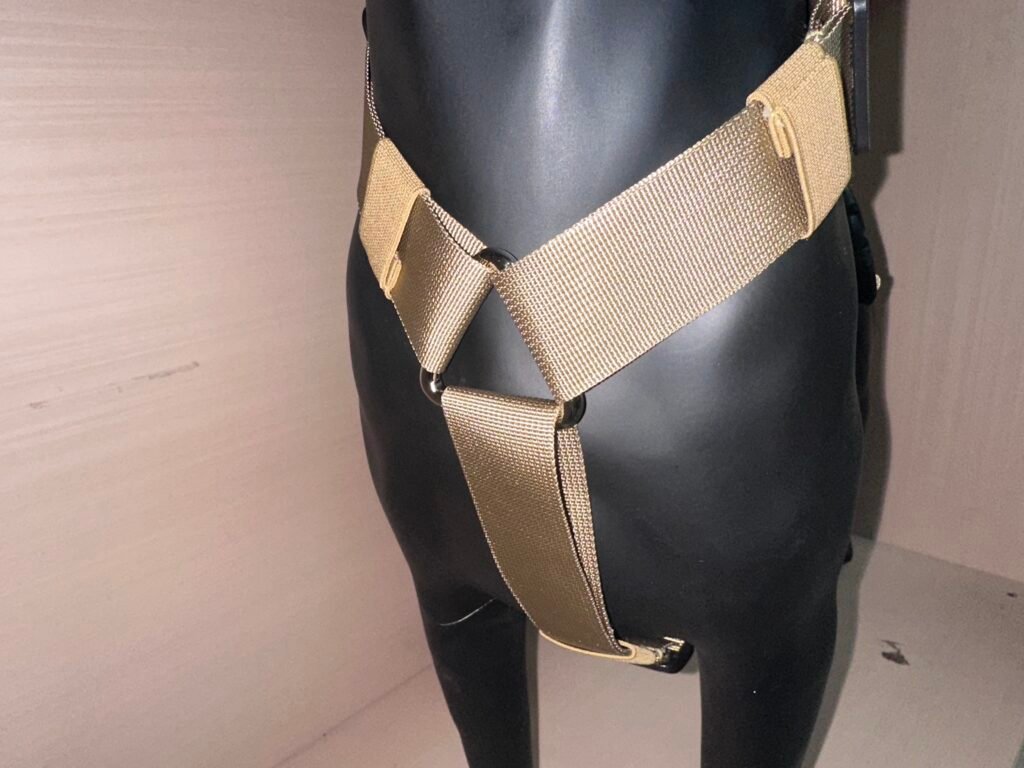
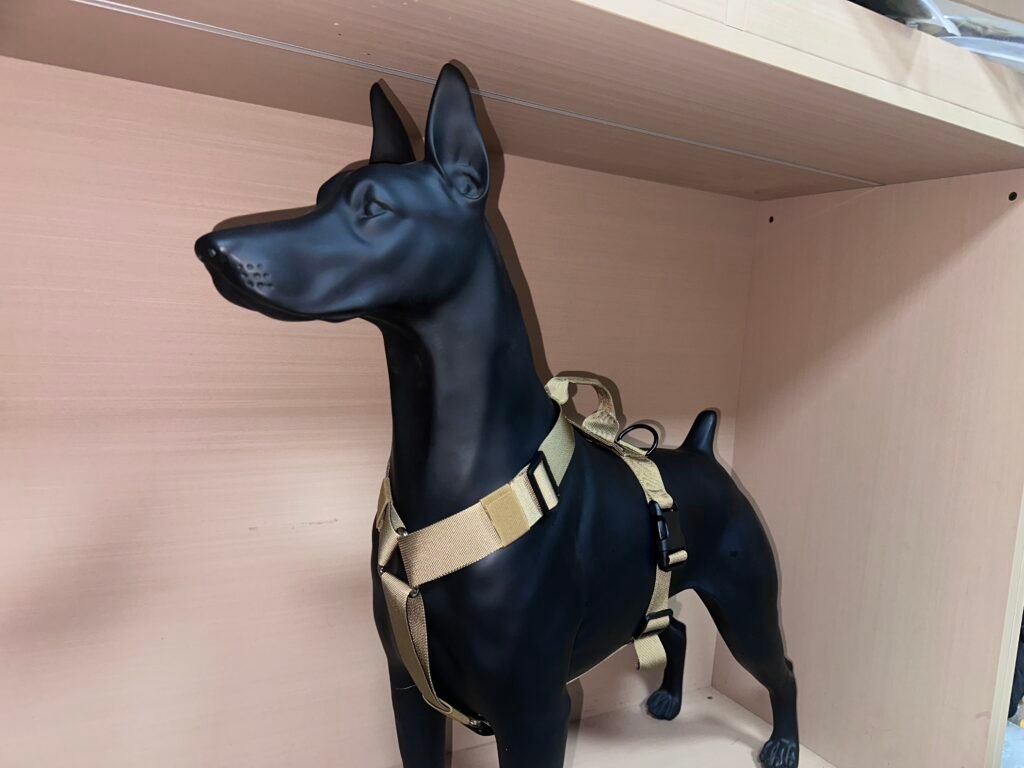
Traditional collars concentrate force on the cervical spine. Even some harnesses focus pressure on narrow chest panels.
A properly designed tactical dog vest distributes load across:
Sternum
Rib cage
Upper shoulder structure
This reduces localized strain during pulling or abrupt stops.
3. Control in High-Stimulation Environments
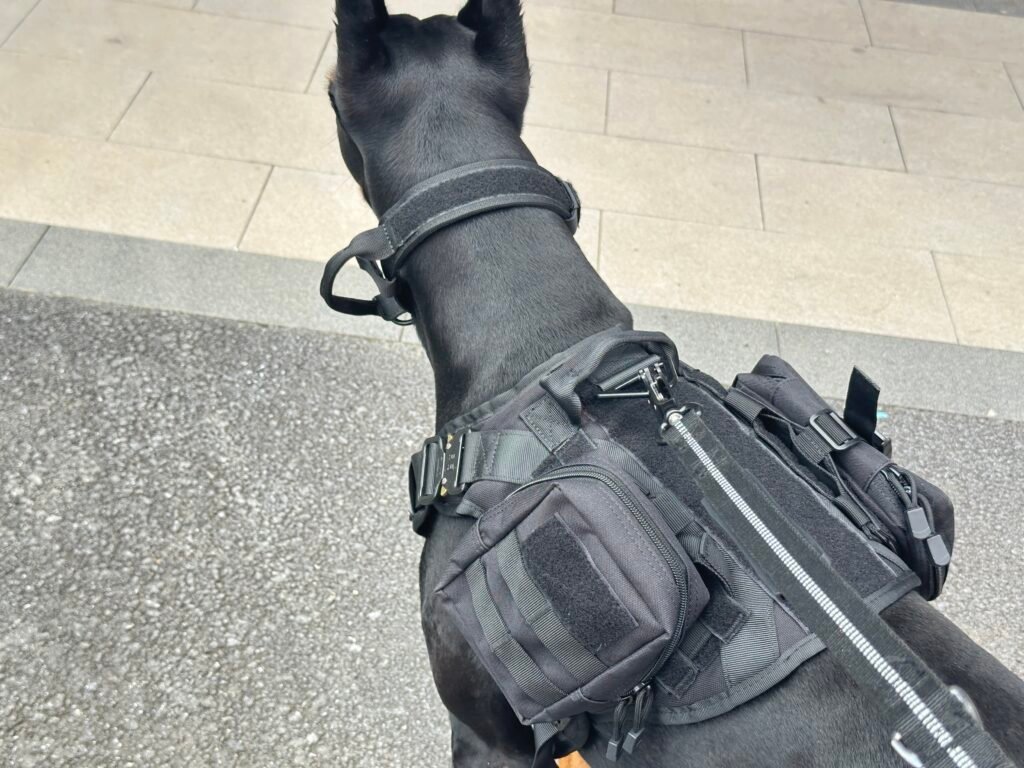
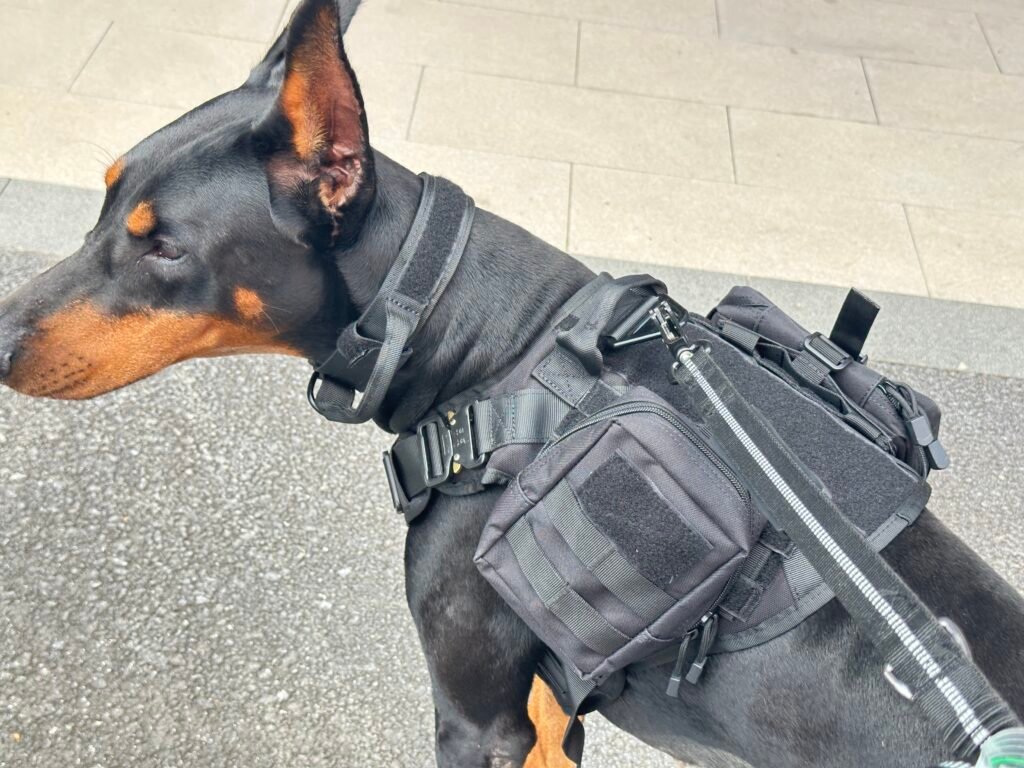
Urban environments, trail crossings, wildlife encounters, or crowded public spaces require instant control.
The reinforced top handle found on most tactical dog harness systems allows handlers to:
Quickly stabilize the dog
Prevent lunging
Assist over obstacles
Safely restrain during vet visits
This is one of the most underestimated features until it’s needed.
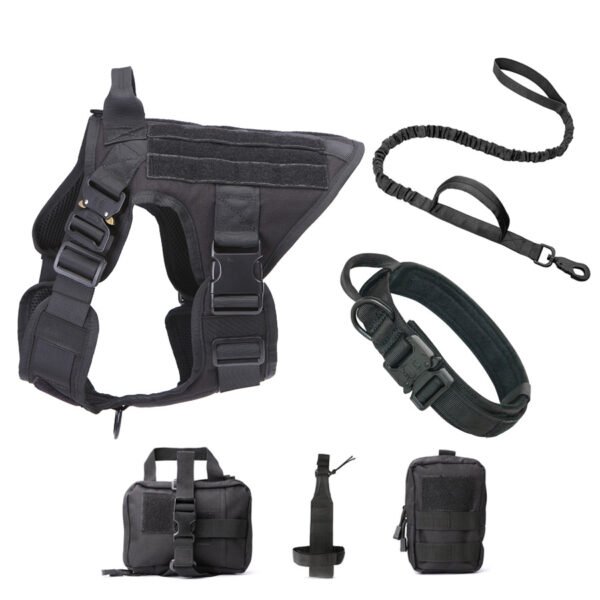
K9 Tactical Vest Kit- Heavy-Duty with Leash, MOLLE Pouches & Water Bottle Holder
k9-tactical-vest-kit– Adjustable MOLLE Gear Kit with Leash & PocketsThis durable tactical dog vest kit includes a MOLLE-compatible harness, leash, collar, storage pouches, and a water bottle holder. Adjustable straps fit most dog sizes, ideal for working K9s, outdoor hiking, training, or tactical use.
Tactical Dog Vest vs Standard Harness: Structural Comparison
| Feature | Standard Harness | Tactical Dog Vest |
| Stitching | Single-line | Reinforced / Box Stitch |
| Hardware | Plastic | Metal Alloy |
| Load Capacity | Moderate | High |
| Control Handle | Rare | Standard |
| MOLLE System | No | Yes |
| Outdoor Durability | Casual | Rugged |
If your dog exceeds 60 lbs and engages in regular training or outdoor activity, the structural advantage becomes significant.https://panoar.com/product-category/all-products/dog-vest/
Critical Features to Evaluate Before Buying
1. Material Quality
Look for:
1000D nylon (preferred)



Reinforced webbing straps
Breathable inner mesh lining
Avoid thin polyester blends marketed as tactical.
2. Stitching Architecture
Inspect high-stress zones:
Strap intersections
D-ring anchor points
Handle base
Box stitching or X-pattern reinforcement increases tear resistance dramatically.
3. Hardware Strength
Metal buckles outperform plastic in:
Temperature resistance
Long-term durability
Impact tolerance
If using plastic, it should be heavy-duty industrial-grade.
4. MOLLE Compatibility
The MOLLE system allows modular expansion:
Medical pouch
Utility pouch
Dog waste bag holder
ID patches
However, overloading can affect balance. Large dogs can carry light gear, but weight distribution must remain symmetrical.
5. Proper Fit and Adjustment System
An improperly fitted vest negates its structural advantages.
Measure:
Chest girth (widest rib section)
Neck base circumference
A tactical vest should:
Sit high on the shoulders
Avoid restricting front leg movement
Allow two-finger spacing under straps
Loose vests shift. Tight vests chafe.
Tactical Dog Vest for Hiking: What Changes?
When hiking long distances:
Breathability becomes critical
Weight balance matters
Padding thickness impacts comfort
Choose lighter tactical harnesses for extended outdoor use.
For mountainous or rugged terrain, prioritize:
Strong top handle
Durable exterior shell
Secure buckle system
If your dog carries gear, ensure total load does not exceed 10–15% of body weight.
Tactical Dog Vest for Training and Working Dogs
For obedience training, bite work, or service dog development:
Stability is more important than storage
A firm chest plate improves control
Handle placement must allow upward lift without twisting
Working dogs benefit from reduced harness shift during rapid direction changes.
Common Mistakes Buyers Make
Buying Based on Appearance
“Military style” does not equal structural integrity.
Ignoring Hardware Quality
Plastic buckles often fail first.
Choosing the Wrong Size
Breed charts are not sizing tools. Measurements are mandatory.
Overloading the MOLLE Panels
Excess weight causes imbalance and fatigue.
Are Tactical Dog Vests Safe for Daily Use?
Yes — if:
The vest fits correctly
It’s not worn 24/7
Skin is checked for irritation
For everyday urban walks, a lighter tactical harness version is often sufficient.
Frequently Asked Questions
Is a tactical dog vest good for strong pullers?
Yes, particularly heavy-duty models with reinforced stitching and metal hardware.
Can large dogs wear MOLLE dog harnesses every day?
Yes, provided the fit is correct and the vest is removed during rest periods.
Is a tactical dog vest better than a collar?
For strong breeds and training scenarios, yes. It distributes force more safely.
Do tactical vests calm dogs?
They may provide a mild stabilizing effect due to chest pressure, but they are not substitutes for training.
Final Buying Framework
When selecting the best tactical dog vest for large dogs, prioritize:
Structural durability
Proper sizing
Hardware quality
Intended usage (training vs hiking vs daily walking)
Weight distribution
Avoid marketing hype. Evaluate construction.
A well-designed tactical dog vest enhances control, improves safety, and withstands the demands of large, energetic dogs.
Our social media: